
Future High-Income Careers: Nine Jobs on the Rise and Where the Human Design Analyst Fits
A viral list names nine careers likely to pay well within a few years. Here is how each one connects to a mechanic in your design, and why the Human Design Analyst belongs on the list.

A post is making the rounds on LinkedIn naming nine kinds of work its author expects to pay the most within a few years: microlearning creators, ethical programmers, biohacking consultants, AI trainers, digital identity designers, burnout coaches, data curators, neurointerface designers, and next-generation online entrepreneurs. Clients keep forwarding it to me with the same question underneath: “Is any of this for me, and where would I even start?”
I can’t verify anyone’s earnings forecast, and I won’t pretend to. What I can do is read the list the way I read a chart. Look at the pattern under the individual items, then ask which of those patterns match a person’s design. The pattern here is easy to see. Every job on the list sits where a machine produces something fast and a human has to decide whether it is correct, safe, remembered, or right for a particular body. That is also where the Human Design Analyst sits, and I think it deserves a tenth line on the list.
Why this list is showing up now
In a recent post of mine I cited Stanford data showing a 13% employment drop for workers aged 22 to 25 in AI-exposed fields since late 2022. Clients tell me the same story in sessions: the job they trained for feels less solid than it did, and they want to know what to build instead.
Ra Uru Hu taught that the old conditioning authority is dissolving and that the only dependable navigation left is your own Strategy and Authority. I wrote about that in the collapse of external authority. Work follows the same logic. When a tool can produce the generic version of almost anything, the paid skill becomes judgment about the specific case in front of you.
The nine jobs, read through a design lens
I’m not claiming Human Design prescribes any of these careers. A chart doesn’t hand out job titles. What it does is show how a person’s energy is built to engage with work, and that tells you which of these roles you could sustain and which would grind you down. Here is how I would think about each.
1. Microlearning creators. Turning something complex into a short lesson people remember is a translation skill. In Analyst training this is the work of explaining a gate, a channel, or a center in one clear paragraph to someone who has never seen a bodygraph. People with a defined Throat and a pull to teach often take to it. The test is whether you respond to the topic with energy, and for a Generator that is a Sacral question, answered in the body.
2. Ethical programmers. Setting moral and legal limits for machines requires someone to hold a line while others push it. Mechanically, that is a very different job for a person with a defined Emotional Authority than for someone with a Splenic one. The emotional person needs to ride the wave before committing to a rule. The splenic person gets one clear signal in the moment and has to trust it. Neither is better. Hiring and self-management both go wrong when no one knows which kind of authority is making the call.
3. Biohacking consultants. The weak point in most biohacking advice is that it assumes one body. In my own work I teach the Primary Health System, which describes how your design affects what food, drink, and environment suit you. When I studied Steve Jobs’s chart for the Thrive by Design material, I could see how the way he ate and the conditions he worked in ran against what his body needed. Personalized health advice without that layer is guesswork with better packaging.
4. AI trainers. Teaching a model language, logic, and emotion starts with people who can tell a fluent answer from a correct one. I’ve tested this on my own subject. An AI can write a confident Human Design reading in seconds that describes a chart you do not have. It invents channels whose second gate is not activated and names the wrong authority. I laid out how to catch that in four checks before you trust an AI reading. The model needs someone who has done the mechanics by hand to correct it.
5. Digital identity designers. Shaping how someone appears online goes better when you know how that person is built. A Projector whose recognition and invitation matter most will present differently than a Manifestor who needs to inform before acting. The Variable adds the layer people usually miss: how someone takes in information, what environment suits them, and how they see and are motivated. Brand work that starts from those facts reads as true to the person, which is what makes it hold up.
6. Burnout coaches. This is the one I see most often in my own practice. The pattern is predictable. A Generator takes the job their mind argued them into and burns out. A non-Sacral type borrows energy from the people around them, becomes what I call a false super-worker, and crashes with an exhaustion rest does not fix. A Projector is told to work hard when the design says wait for recognition. A burnout coach who understands why a given person depleted themselves gives a more useful answer than one who just prescribes rest. I covered the underlying mechanics in Projectors are not built to work hard and in the post on non-Sacral energy at work.
7. Data curators. Separating truth from noise in a flood of information is also a skill I teach, because Human Design itself has a flood problem. Gates, channels, and keynotes get repeated online with errors that harden into pop versions of the system. A curator who can check a claim against the source material is valuable. Mine is the original Ra Uru Hu system, and I source what I teach from it.
8. Neurointerface designers. I’ll be direct about this one. It is outside my teaching and I have nothing grounded to say about the engineering. What I will say is that anyone connecting a person to a machine is dealing with the question Human Design starts from: how does this particular nervous system take in and respond to the world? Without a model of the person on the other side, you are designing for an average that does not exist.
9. Next-generation online entrepreneurs. Building income from home on personal branding and AI tools is the path most of my students are on. I’ve worked that way since I built my practice from a home office, with no commute and a schedule I could shape around my energy. The mechanical advice is the same as in my career strategy post: a Generator builds by responding, a Projector by being recognized and invited, a Manifestor by informing, a Reflector by taking a full lunar cycle before major moves. The entrepreneurs I watch struggle are the ones copying a hustle schedule built for a different design.
The tenth line: the Human Design Analyst
Look back at the list and one thing connects the roles. Each of them needs a person who understands people at the level of how they are built, not just what they say they want. That is the Analyst’s whole job.
A Human Design Analyst reads a chart accurately, explains it so the client can use it, and guides them through the changes it brings. In practice that touches several of the jobs above. Analysts coach burned-out clients, translate complex mechanics into lessons, advise on health and environment, and help people shape how they show up in public. Some also work as the human verification layer for AI-generated readings, because someone has to catch the invented channel.
The practical side matters, so here it is without hype. The work is self-employed and flexible. In my first years as a professional I valued being able to choose full-time or part-time as a Projector, and the creative freedom of writing, teaching, and building programs. It is also a real business with real work in it. My own practice runs at six figures, and I could not have built it without a team that took on what I can’t do. I’d treat any income promise from any career list, including this one, as unproven until you test it in your own life.
If you are weighing the path, here is what the training looks like at the level of structure:
- Level 1 builds fluency in the mechanics: gates, channels, centers, and the four views of type, strategy, authority, and profile.
- Level 2 goes into life cycles and relationships. I call cycles the bread and butter of professional work, because they are what clients are living through when they call.
- Level 3 takes on the Incarnation Cross and the question of purpose.
- Level 4 is professional practice: how to hold space and deliver a reading that sticks without burning yourself out.
Before any of that, the first assignment is your own chart. You cannot translate what you have not experienced in yourself. Generators study their own chart first. Projectors study the people around them. Manifestors study their impact, and Reflectors study their lunar cycle. If you haven’t yet, calculate your free chart and see which centers are defined before choosing anything else.
How to choose among all of these
Don’t pick from the list with your mind. Run it as an experiment, which is how I teach Strategy and Authority. Write down the two or three roles that interest you, then work with your own authority over a few weeks. A Generator notices which options draw a clear sacral response. A Projector notices which ones bring real recognition and invitation. Someone with Emotional Authority gives it time and checks back after the wave settles.
If the Analyst path calls to you, start with what a Human Design career looks like and the details of Analyst training, Level 1. I also wrote about what every new analyst gets wrong at first, and it is worth reading before you commit anywhere.
The jobs on that LinkedIn list may or may not pay what the post promises. The pattern underneath should hold: as machines get better at producing, the scarce skill is knowing what is correct for one specific human being. That skill is learnable, and it starts with your own chart.
From my courses
 Black Friday through November 30 Analyst Training Sampler Sit in on a full class from every level of Professional Analyst Training. $297 through November 30, then $497$497 See the course
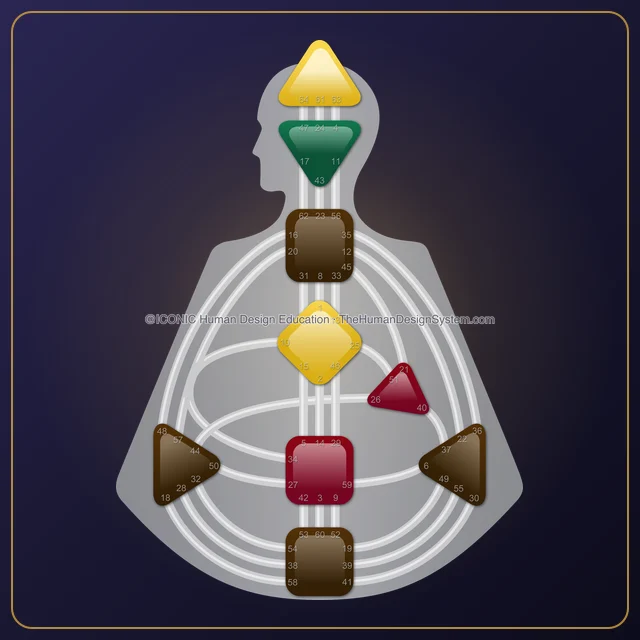 Black Friday through November 30 Fundamentals Sampler Three full classes on your Authority, your Type and your SubType. Yours to keep. $197 through November 30, then $297$297 See the course
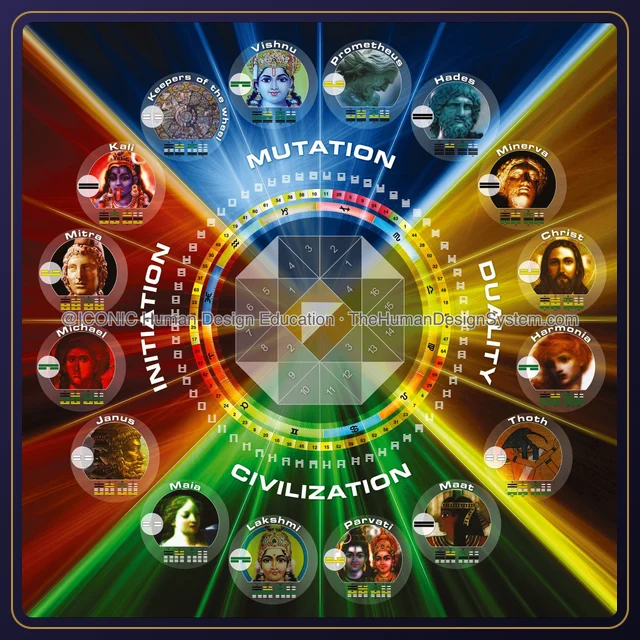 Black Friday through November 30 Human Design Cosmology Sampler Hear all seven volumes of Ra Uru Hu’s cosmology and find the one that pulls at you. $297 through November 30, then $497$497 See the course
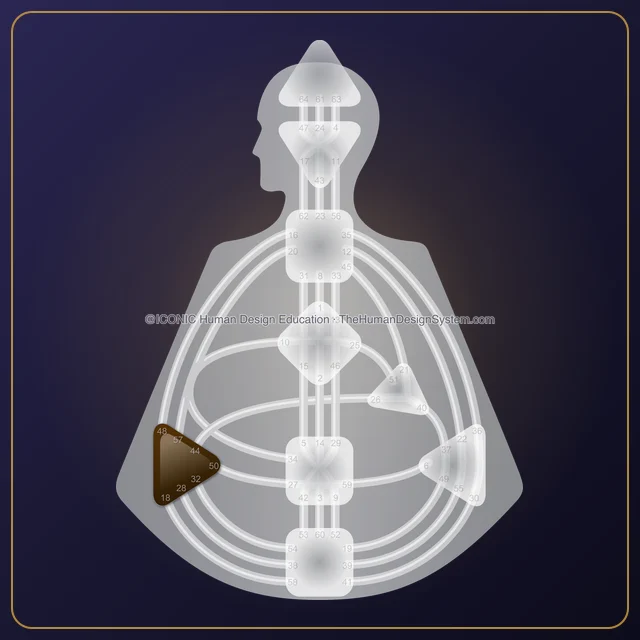 Black Friday through November 30 Health & Wellness Sampler Ten health courses, one module each, read through your own design. $397 through November 30, then $597$597 See the course
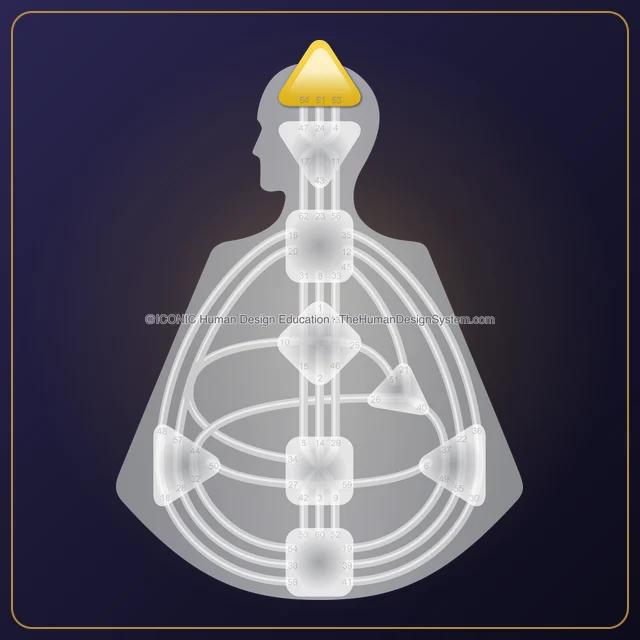 Black Friday through November 30 Best Rest by Design A whole course on sleeping by your design, built around your own chart. $297 through November 30, then $497$497 See the course
 Self-paced course Relationship Mastery How you love, connect and get along, by design. $697 See the course
 Self-paced course The Four Variable Transformations Determination, Environment, Perspective and Motivation, as four guided experiments. $850 See the course
 Where to begin Living Your Design Awakening The first class in the Human Design education, with the community around it. $350 See the course
 Foundations Human Design Cartography The second level of Human Design education, and the way into all advanced study. $850 See the course
 Professional training Human Design Analyst Training Level 1 (PTL1), Full Year A year on the 64 gates, the 384 lines and the art of a full chart reading. $3,450 See the course
See this in your own chart
Generate your free bodygraph and start your own experiment.
Get My Free HD Chart