
Which of the Following Is a Self-Actualization Need? A Center-by-Center Check
Not every felt need is a self-actualization need. Here's how to sort genuine Design-level needs from conditioned, open-center noise, center by center.

A common quiz-style framing asks which of several listed needs counts as a self-actualization need, treating it like a multiple-choice sorting exercise. Human Design offers a useful version of that sorting test: checking a felt need against the specific center it’s coming from, since not every urgent-feeling need is structural. I carry a totally open Ajna, so I’ve had a lot of firsthand practice telling the difference between what’s mine and what I’ve absorbed from the room.
The test: is it coming from a defined center or an open one?
The single most useful sorting question is this: does the need originate from a center that’s defined in your own chart, fixed and consistently yours, or from an open center, which amplifies and absorbs whatever’s present in the environment? A need arising from a defined center is far more likely to be a genuine, structural self-actualization need, something your actual Design requires in order to express correctly. A need arising from an open center is more likely to be conditioning, borrowed urgency picked up from someone else’s field rather than anything, structurally yours.
This reframes the sorting exercise usefully. Instead of guessing which needs sound more “spiritual” or “elevated,” check the actual chart mechanic generating the need.
Center by center: what a genuine need looks like
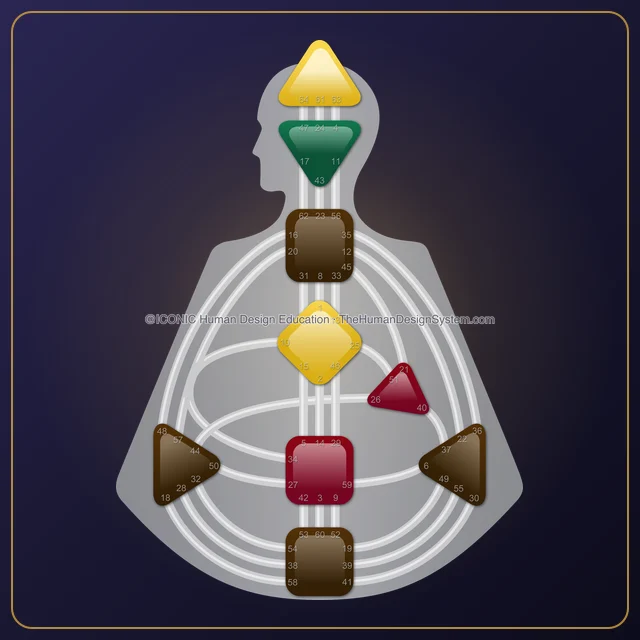
A defined Sacral generates a genuine need to respond to life force engagement, real work that engages energy, not just any task. A defined Throat generates a genuine need for a consistent outlet of expression, matching whatever gate is activated there. A defined G Center generates a genuine need for stable identity and direction, an actual felt sense of who you are and where you’re going, not a borrowed sense of purpose absorbed from someone else’s confidence. A defined Root generates a genuine need for sustainable pressure and completion, not endless, unstructured urgency.
Open versions of each of these centers generate needs that feel just as urgent, but that shift depending on who’s around: an open Sacral picking up others’ work ethic as personal urgency, an open G Center chasing borrowed identities and directions that never quite settle, an open Root absorbing environmental pressure as though it were personal deadline stress.
Why this distinction matters for the “which one is real” question
Sorting exercises that ask which need is a genuine self-actualization need are implicitly asking you to distinguish signal from noise, and this center-by-center check is a concrete way to do that, rather than relying on how urgent or important a need subjectively feels. Urgency and importance are not reliable indicators on their own. An open-center need can feel every bit as pressing as a defined-center one, sometimes more so, because open centers amplify rather than moderate whatever they’re picking up.
A practical check you can run yourself
When a need feels pressing, ask: is this center defined in my own chart? If yes, it’s worth taking seriously as a genuine, structural requirement. If it’s open, the more useful question becomes whose need this might be, absorbed from a partner, a colleague, a room full of people, rather than assuming it’s automatically your own because you’re the one feeling it.
This practical check turns an abstract multiple-choice framing into something actionable: not a guess about which need sounds more legitimate, but a specific, checkable fact about your own chart.
What to do with this
Before assuming a felt need is a genuine self-actualization need, run it against your own chart’s definition. Needs from defined centers deserve real, sustained attention as structural requirements. Needs from open centers deserve a different kind of attention entirely, investigating whose energy is being amplified, before building major life decisions around urgency that may never have been structurally yours to begin with.
From my courses
 Black Friday through November 30 Fundamentals Sampler Three full classes on your Authority, your Type and your SubType. Yours to keep. $197 through November 30, then $297$297 See the course
 Black Friday through November 30 Analyst Training Sampler Sit in on a full class from every level of Professional Analyst Training. $297 through November 30, then $497$497 See the course
 Black Friday through November 30 Human Design Cosmology Sampler Hear all seven volumes of Ra Uru Hu’s cosmology and find the one that pulls at you. $297 through November 30, then $497$497 See the course
 Black Friday through November 30 Health & Wellness Sampler Ten health courses, one module each, read through your own design. $397 through November 30, then $597$597 See the course
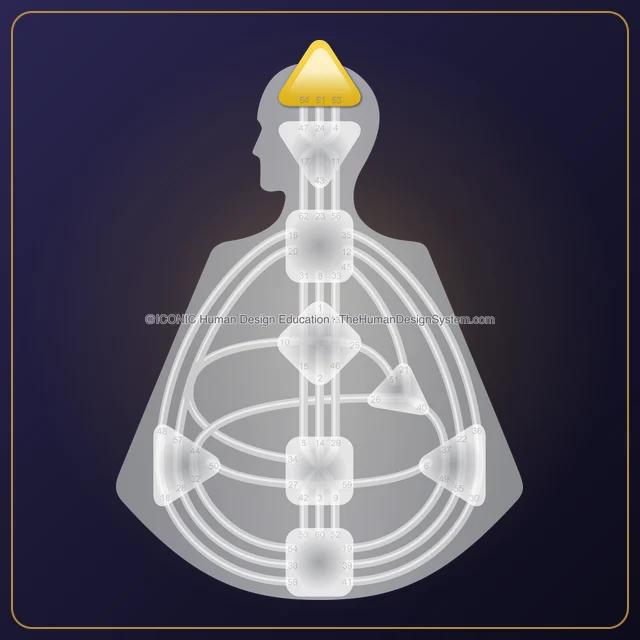 Black Friday through November 30 Best Rest by Design A whole course on sleeping by your design, built around your own chart. $297 through November 30, then $497$497 See the course
 Self-paced course Relationship Mastery How you love, connect and get along, by design. $697 See the course
 Self-paced course The Four Variable Transformations Determination, Environment, Perspective and Motivation, as four guided experiments. $850 See the course
 Where to begin Living Your Design Awakening The first class in the Human Design education, with the community around it. $350 See the course
 Foundations Human Design Cartography The second level of Human Design education, and the way into all advanced study. $850 See the course
 Professional training Human Design Analyst Training Level 1 (PTL1), Full Year A year on the 64 gates, the 384 lines and the art of a full chart reading. $3,450 See the course
See this in your own chart
Generate your free bodygraph and start your own experiment.
Get My Free HD Chart