Split Definitions and Relationships
A one-hour lecture from Ra Uru Hu on split definition, the not-self, and what a split brings into a partnership.
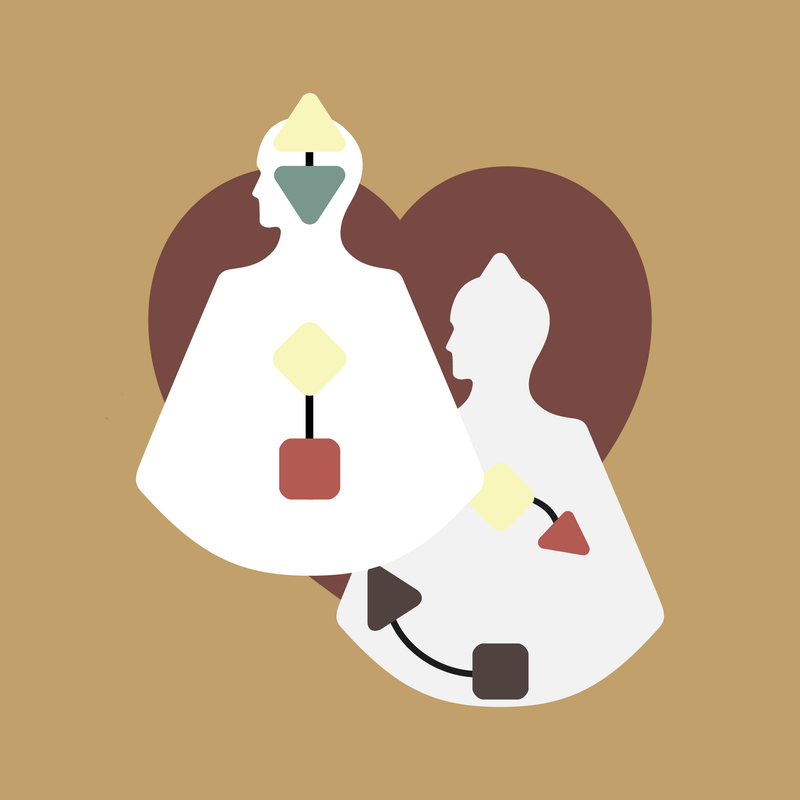
Split Definitions and Relationships
Sold by the Jovian Archive. I do not set their prices, so the current one is on their page.
View on Jovian Archive →Affiliate link. I earn a commission if you buy through it, at no extra cost to you, and I am Education Director of the Jovian Archive.
Definition is the consistent part of a chart, and the way it is arranged says a great deal about how someone relates. A single definition runs as one connected piece. A split carries two or more separate areas of definition with a gap between them, and in relationship that gap is where much of the attraction and much of the friction live. This lecture takes that one mechanic into partnership. It is a single audio lecture of about an hour, and Jovian includes the classroom presentation and an ebook with it.
The not-self is the thread that ties definition to relationship, and it is how I teach splits. The kind of split shapes the story a person's not-self mind tells about the people around them. When a single gate would bridge the split, the mind tends to turn the gap into a personal fault. When it takes a channel, the complaint moves to the partner. A very wide split widens it again, to the world. A triple split is built to take in a great deal of information from groups of people, and a quadruple split is rare, more fixed, and less flexible.
Basic splits are the ones most oriented toward pairing. They are collaborative by design and are not built to be alone. When a partner's activations bridge your split, the relationship can feel unusually whole. When the connection chart leaves it open, both people tend to feel one specific frustration that keeps coming back. In his analyst trainings Ra makes the point that splits do not want to be whole, which surprises most students, and it points the work toward living correctly with the gap.
The width of a split also shows up in pace. The more splits, and the wider they are, the longer a person tends to take to process information, which is useful to know before a couple argues about pace. In Level II this lecture sits next to the Partnership Analysis ebook, where splits come up chart by chart.
What it covers
- Single, split, triple split and quadruple split definition
- The bridging gate or channel as the seat of the not-self story
- Why a basic split looks for an other
- What happens when a partner bridges your split, and when the connection leaves it open
- Triple splits and taking in information from groups
- Split width and the pace of taking in information
Who it is for
- Analyst Training students preparing for Level II, connections and cycles
- Anyone with a split definition who keeps looking to a partner to feel complete
- Couples where one or both people are split and the same argument keeps recurring
- Practitioners who want split mechanics in hand before they read connection charts