
How Gene Variants Shape Health and What You Can Do About It
COMT and MTHFR gene variants can slow your body's detox, stress recovery, and brain chemistry by 20 to 80 percent. Here's what the research says, how to support your body, and how it ties back to your Human Design.

How COMT and MTHFR Variants Affect Vitality
I’m LaVeena B. Archers, PhD, your companion in Human Design and living with Autoimmune (thankfully reversing that downward slide through Holistic Functional Medicine).
Genes aren’t just fixed plans for our nature; they’re like hidden switches that can influence everything from your mood to your energy levels. Today, we’re talking about two big players: COMT and MTHFR gene mutations. These aren’t rare oddities that only an oddball like me has! Millions carry variations that slow them down functionally by 20-80%, affecting how the body handles stress, detox, and brain chemicals. If you’ve got fatigue that won’t quit, mood swings, or nagging health issues, this could be a piece of your puzzle. We’ll break it down, cover the full scope of potential impacts on chronic conditions, and share real-world ways to support your body. Remember, this is shared knowledge for awareness (chat with a healthcare pro for your specifics). Let’s dive into it.
Your genes are not your destiny. They are your roadmap.
Five Places Variants Show Up
COMT and MTHFR are two well-studied examples, but variants like these turn up across the whole body, not just detox and methylation. They’re common, not rare, and they can be one contributor to symptoms people chase for years without an answer: fatigue, brain fog, anxiety, thyroid struggles, mood swings. Testing adds a missing piece, so support gets targeted instead of guessed.
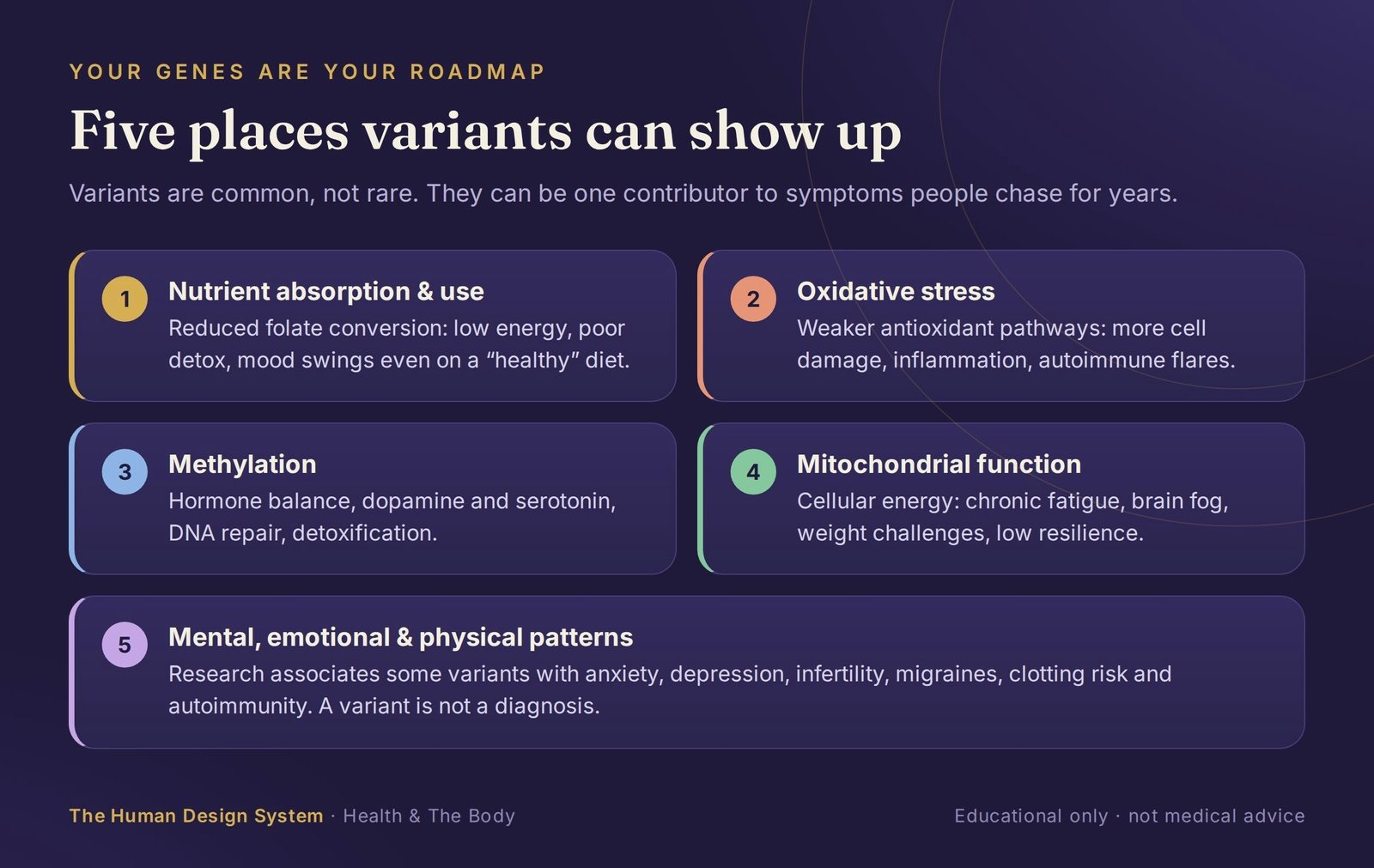
- Nutrient absorption and utilization. Variants like MTHFR can reduce folate conversion, which shows up as low energy, poor detox, and mood instability even when the diet is “healthy.” This extends to how you process carbs, cholesterol, vitamins and minerals, and which foods you tolerate.
- Oxidative stress. Reduced antioxidant pathways (SOD2 is the classic one) mean more cellular damage, faster aging, inflammation, and a higher risk of autoimmune flares.
- Methylation. Poor methylation affects hormone balance, neurotransmitter production (dopamine, serotonin), DNA repair, and detoxification, and has been associated with anxiety and depression patterns. COMT and MTHFR both live here.
- Mitochondrial function. Variants can impair energy production at the cellular level: chronic fatigue, brain fog, weight challenges, reduced resilience, and how your body responds to endurance versus power training.
- Mental, emotional and physical syndromes. Research has associated some variants with anxiety, depression, infertility, migraines, clotting risk, and autoimmune conditions. A variant is not a diagnosis, so interpret results with a qualified provider.
The COMT Gene
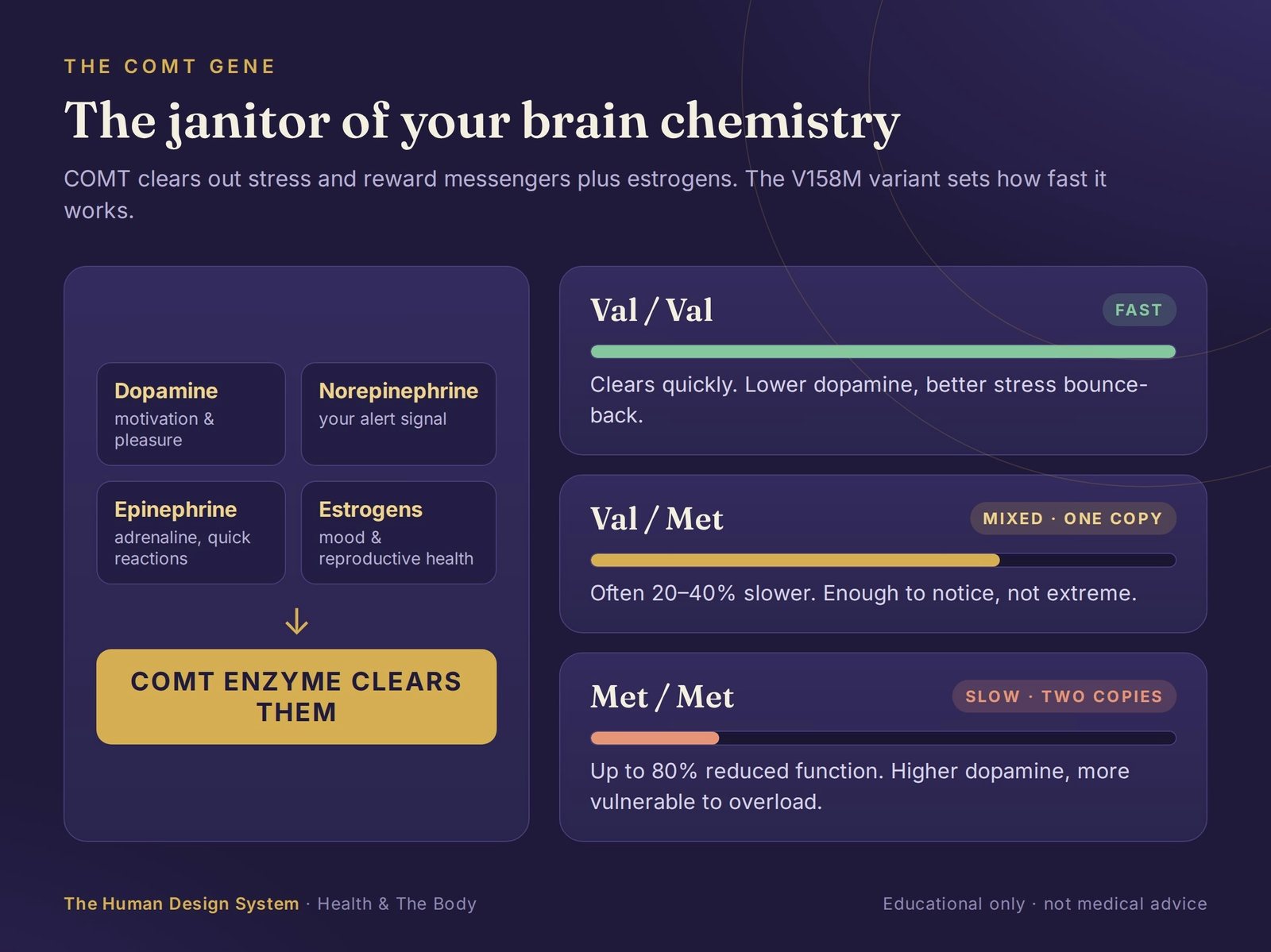
Picture COMT as the janitor in your system, mopping up excess brain messengers like dopamine (which boosts motivation and pleasure), norepinephrine (your alert signal), and epinephrine (adrenaline for quick reactions). It also clears out estrogens, those hormones key to mood and reproductive health. When COMT works well, things stay balanced. But common tweaks in the gene (especially the V158M spot) can slow it down.
Most folks with these changes have what’s called heterozygous (one altered copy, often 20-40% slowdown) or homozygous (two copies, up to 80% reduced function). The “fast” version (Val/Val) clears things quickly, leading to lower dopamine and better stress bounce-back. The “slow” one (Met/Met) lets stuff build up, which can mean higher dopamine but more vulnerability to overload. If you’re in the middle (Val/Met), it’s a mix, enough to notice but not extreme.
What Happens When COMT Slows Down
A slower COMT doesn’t flip a switch to disease overnight, but over time, it can tip the scales toward ongoing issues, especially if stress, diet, or other genes pile on. Here’s the rundown:
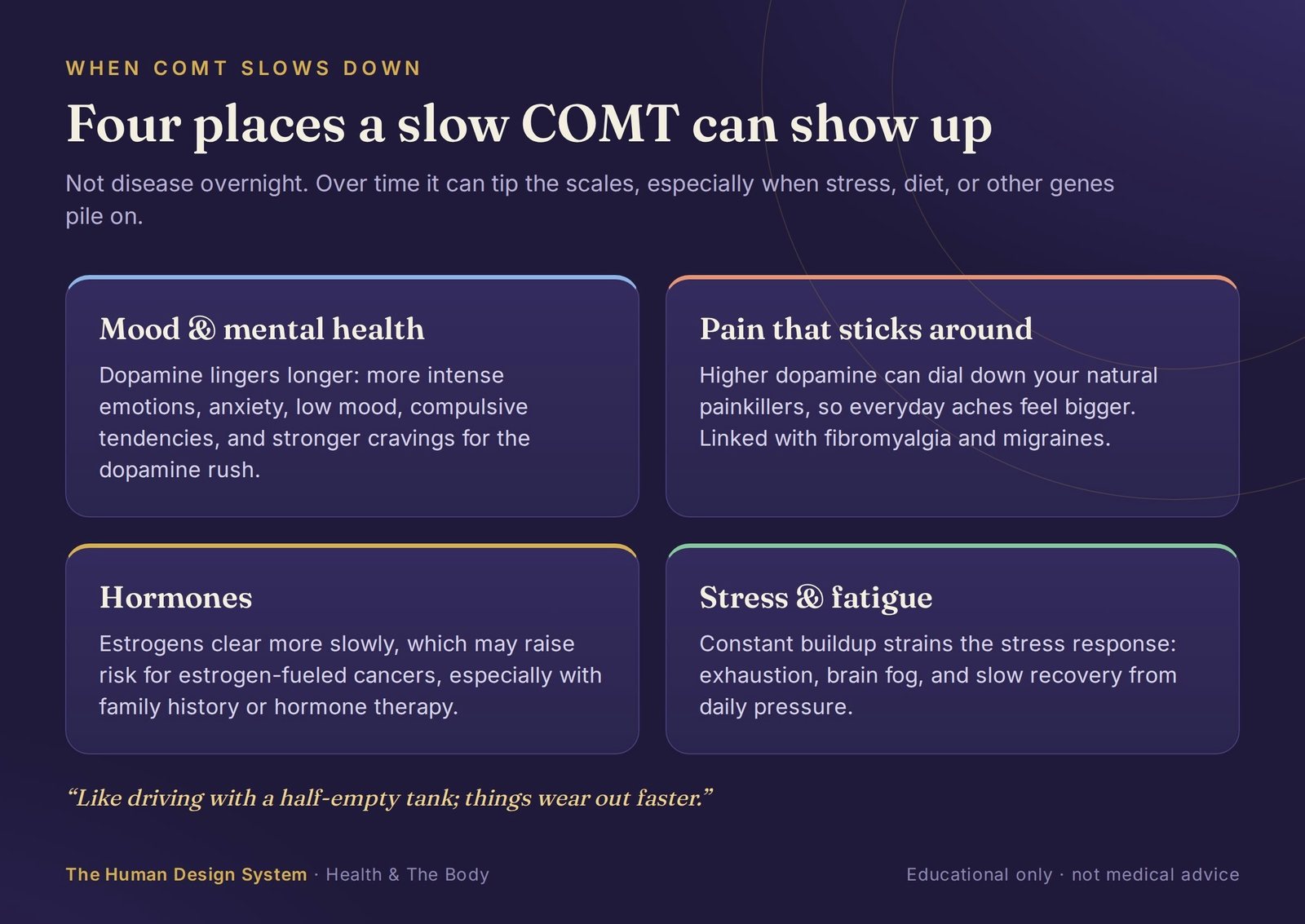
- Mood and Mental Health Struggles: With dopamine lingering longer, you might feel more intense emotions or get hooked on highs from things like food or activities. This links to anxiety, depression, obsessive-compulsive tendencies (more in men), panic attacks, PTSD, bipolar swings, and even harsher schizophrenia symptoms. Addiction risks go up too (think alcohol, drugs, or behaviors) because the brain craves that dopamine rush.
- Pain That Sticks Around: Higher dopamine can dial down your natural painkillers (endogenous opioids), making everyday aches feel bigger. This shows up in chronic pain like fibromyalgia or migraines. Oddly, slow COMT folks might need less pain meds to feel relief, thanks to extra opioid receptors. In Parkinson’s, it affects how treatments like L-DOPA work, sometimes needing adjustments.
- Hormone and Cancer Concerns: Estrogens don’t clear out as fast, which could raise risks for estrogen-fueled cancers, like breast or ovarian, especially with family history or hormone therapies.
- Stress and Fatigue Overload: Constant buildup stresses the adrenals, leading to what some call “adrenal fatigue” exhaustion, brain fog, and trouble recovering from daily pressures. This ties into heart issues indirectly through unchecked stress hormones.
These aren’t guarantees; lifestyle and environment play huge roles. But if COMT is sluggish, it’s like driving with a half-empty tank; things wear out faster.
Supporting a Slow COMT
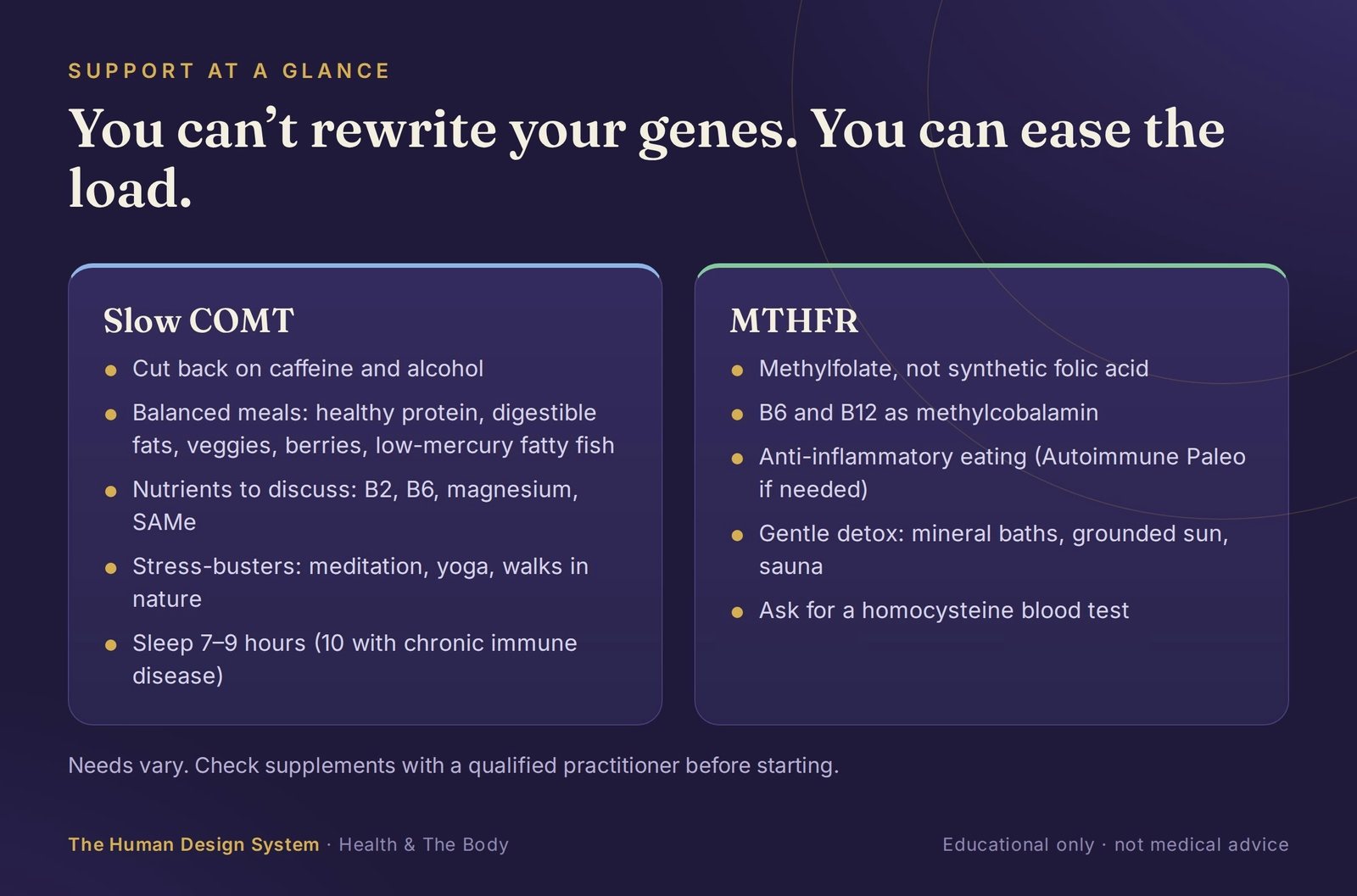
You can’t rewrite your genes, but you can help your body adapt. Focus on easing the load:
- Diet Tweaks: Cut back on caffeine, alcohol, and high-protein foods (making sure your gut works properly so you can digest and absorb them) that amp up those chemicals. Go for balanced meals with healthy proteins, digestible fats, veggies and anti-inflammatory foods like berries and low mercury fatty fish.
- Supplements to Consider: B vitamins (like B2, B6), magnesium, SAMe (for methylation support), and things like fulvic acid or marine nutrients can help the enzyme work better. Always check with a doc, as needs vary.
- Lifestyle Habits: Stress-busters like meditation, yoga, or walks in nature. Prioritize sleep (aim for 7-9 hours, 10 if you are dealing with chronic immune disease) to let your system reset. If pain’s an issue, explore therapies like acupuncture or gentle exercise.
The MTHFR Gene
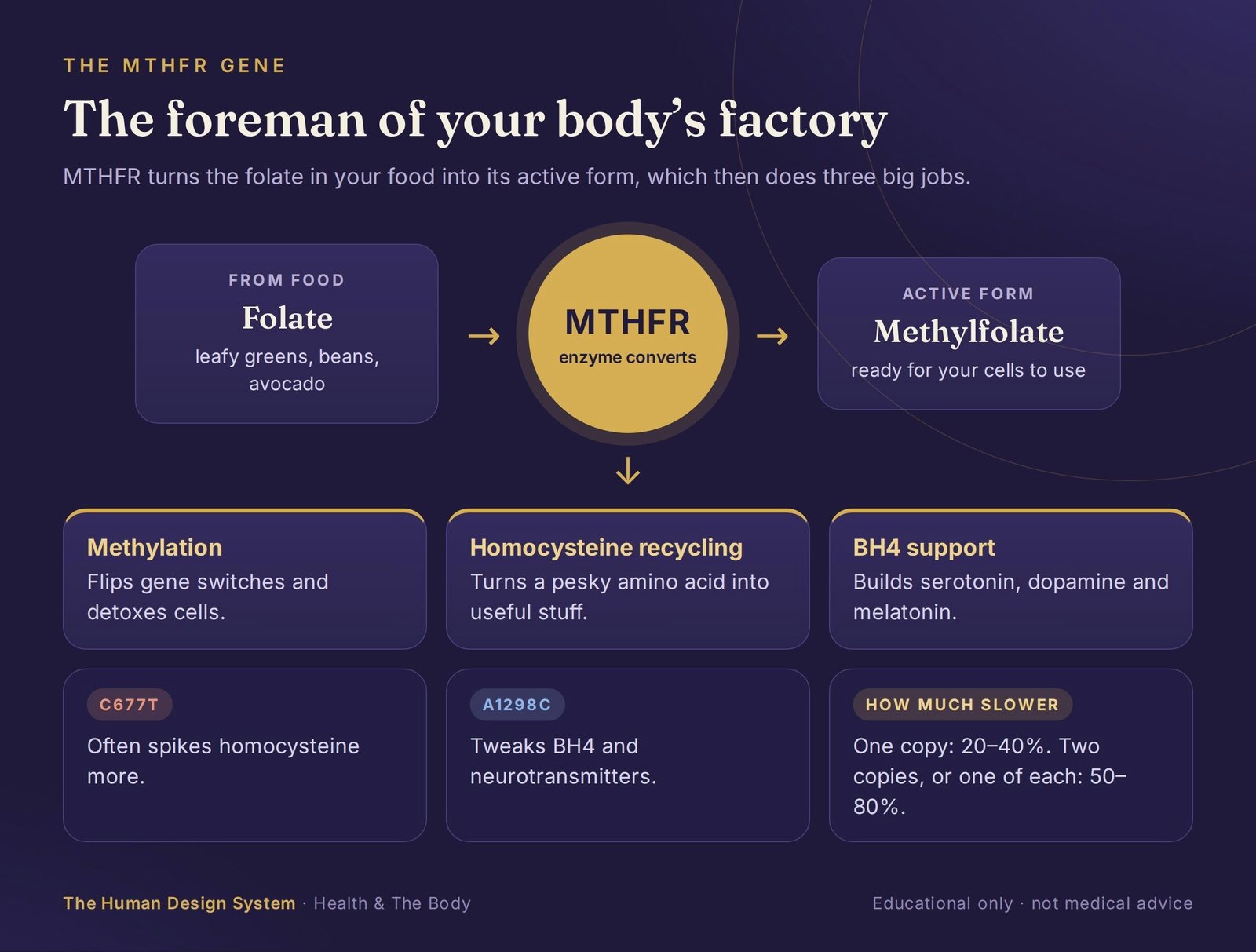
MTHFR is like the foreman in your body’s factory, turning folate (from foods like spinach) into a form that flips gene switches, detoxes cells, and recycles homocysteine (a pesky amino acid) into useful stuff. It also supports making BH4, which helps build brain signals like serotonin (for calm), dopamine, and melatonin (for sleep).
Common changes here are C677T and A1298C. Heterozygous (one copy) might mean 20-40% slowdown, while homozygous (two) or compound (one of each) can hit 50-80%. C677T often spikes homocysteine more, while A1298C tweaks BH4 and neurotransmitters.
Broader Impacts, From Heart to Head
Partial MTHFR function can snowball into chronic troubles, but again, it’s one factor among many.
- Heart and Blood Woes: High homocysteine irritates vessels, raising odds for clots, strokes, heart attacks, or high blood pressure. Inflammation from this might feed autoimmune issues too.
- Brain and Mood Challenges: BH4 shortages mess with feel-good chemicals, linking to depression, anxiety, bipolar, schizophrenia, migraines, and even autism traits. Cognitive fog or insulin resistance can tag along.
- Other Body Hits: Think fibromyalgia (chronic pain), IBS (gut troubles), infertility, miscarriages, or birth defects like neural tube issues. It might worsen diabetes or coronary disease.
These variants are common (up to 40% carry one) and risks vary by ethnicity or combos.
Supporting MTHFR
Boost what your body needs:
- Folate Focus: Skip synthetic folic acid (in fortified foods); opt for methylfolate supplements or natural sources like dark leafy greens, beans, and avocados. B6 and B12 (as methylcobalamin) help too.
- Diet and Detox: Eat anti-inflammatory (try Autoimmune Paleo if you’re in chronic immune challenges): think colorful veggies, properly prepared seeds/nuts, and proteins. Limit processed stuff. Stay hydrated and consider gentle detox like mineral baths, grounded sun exposure and saunas.
- Lifestyle Boosts: Exercise moderately, make efforts to manage stress (key for BH4), and get blood tests for homocysteine levels. For pregnancy, extra methylfolate is crucial.
Here’s the support plan for both genes at a glance:
Getting Tested: dnaPower
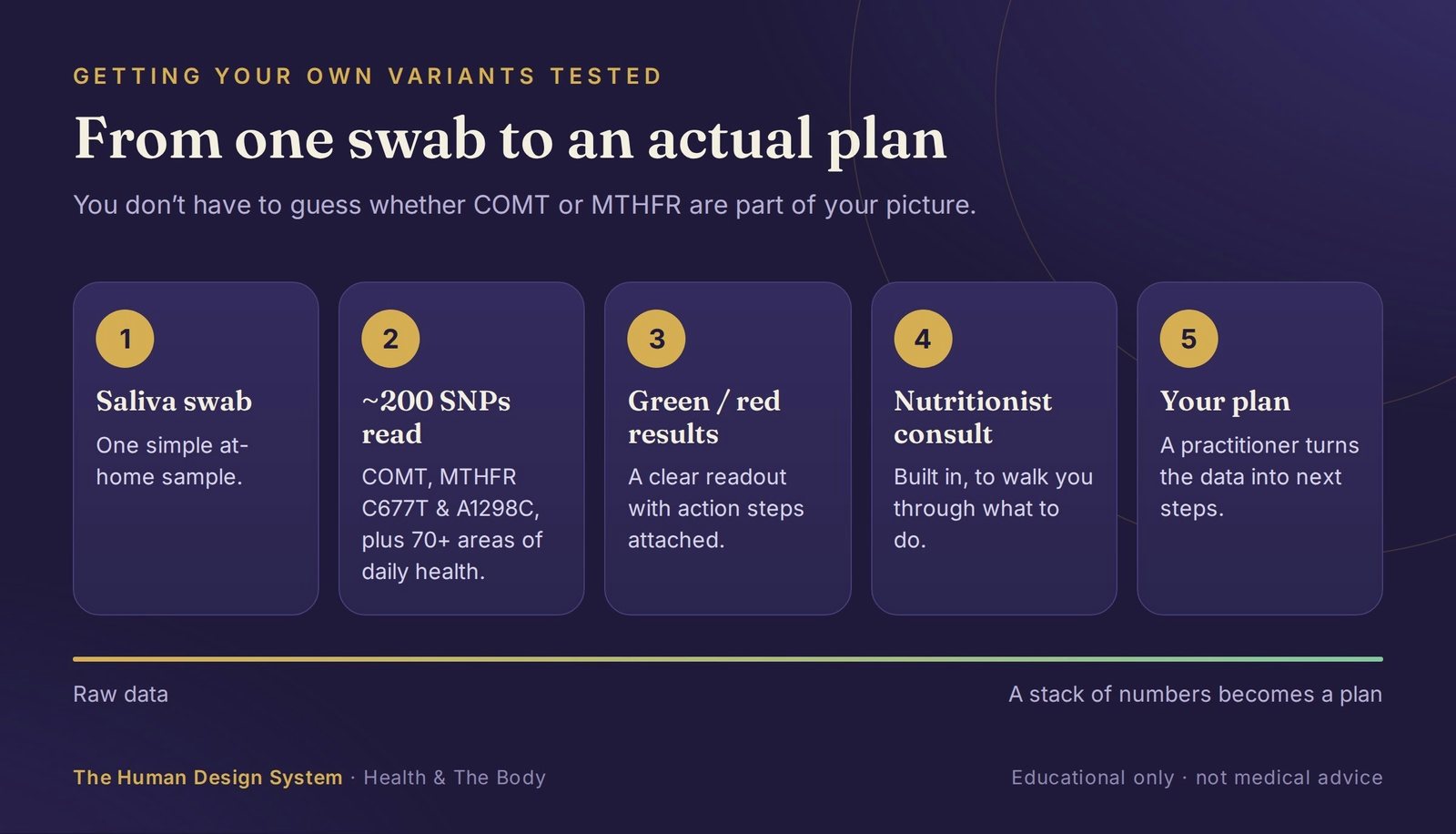
You don’t have to guess whether COMT or MTHFR, or any of the five areas above, are part of your picture. A single saliva swab covers both, plus MTHFR’s A1298C and C677T variants specifically, alongside roughly 200 other SNPs across 70-plus areas of day-to-day health, from methylation to nutrient metabolism to detox. Results come back as a straightforward green/red readout with clear action recommendations attached, and a nutritionist consult is built in to walk you through what to actually do with them.
If and when testing is right for you, I recommend our partner lab, dnaPower, a DNA, microbiome and pharmacogenetic testing company that has served individuals and practitioners since 2008. Your results are delivered to your own secure dnaPower portal.

Order your dnaPower test here →
Please order through this link so your kit is connected to me for support. Disclosure: this is a partner link, and I may earn a commission at no extra cost to you. I completed dnaPower’s DNA Diet, Fitness, and Health Coach training, so I can walk you through the reports once they arrive.
See the reports before you order. Open a sample report to see exactly what you would receive:
- healthPower: detoxification pathways, hormone metabolism, inflammation response and methylation. The closest match to COMT, MTHFR, and the oxidative-stress bucket above.
- dietPower: carbohydrate, starch, insulin, cholesterol and dietary fat metabolism, plus food tolerances and how you process vitamins and minerals.
- brainPower: cognitive resilience, sleep-wake cycle, cortisol regulation and mood-related variants.
- fitPower: endurance, power and sprint response, mitochondrial energy production, and ligament and tendon strength.
- summaryPower: an at-a-glance summary of key results.
Compare every panel in one place: dnaPower Tests Available (PDF).
Activating your kit:
- When your kit arrives, go to dnapower.com and click Customer Portal in the top right corner.
- Click Register (top right of the Sign In box) to create your account, then click Activate Kit.
- Enter the barcode from your swab and your details, and select the report you ordered (for example totalPower or dietPower).
- In the “dnaPower Certified Partner Email” field, enter the partner email from the contact form if you don’t already have it, this is required, and it’s what connects your kit to me for future reference or optional sessions.
- Accept the Terms of Service and click Submit.
Your kit will appear under Reports with the status “pending.” When your results are ready, they populate in your portal and, because your kit is connected to me, they are shared with me at the same time.
Once you have your results in hand, a functional medicine practitioner (or myself, through the contact form) can help you turn the raw data into an actual plan instead of a stack of numbers. A variant is a data point, not a verdict; interpret results with a qualified provider, especially anything touching disease risk rather than nutrient response.
If you’re working through Aligned Health Labs: this reading is your Week 3 supplement, alongside the Health History Intake. It’s optional, and nothing in the labs waits on it. If you already have genetic results from any source, add a line to your Health History Intake listing what you know. If you don’t, note that too, known variants sharpen the conversation once we get to your Determination and Environment. Bring your questions to a live clinic, and please don’t post your raw results in the community, they’re yours to hold close.
Tying It to Human Design
In Human Design, awareness types like Reflectors or Projectors (that’s me!) are called “non-energy” because we have no consistent access to Generation or Manifestation. It is NOT that the energy flows in patterns, waves or spurts (EVERYONE’S DOES!) and it is NOT that Generators always have steady energy (theirs is governed by the Availability of their Sacral to RESPOND).
Is this a dangerous big myth flying around as dogma? YES!
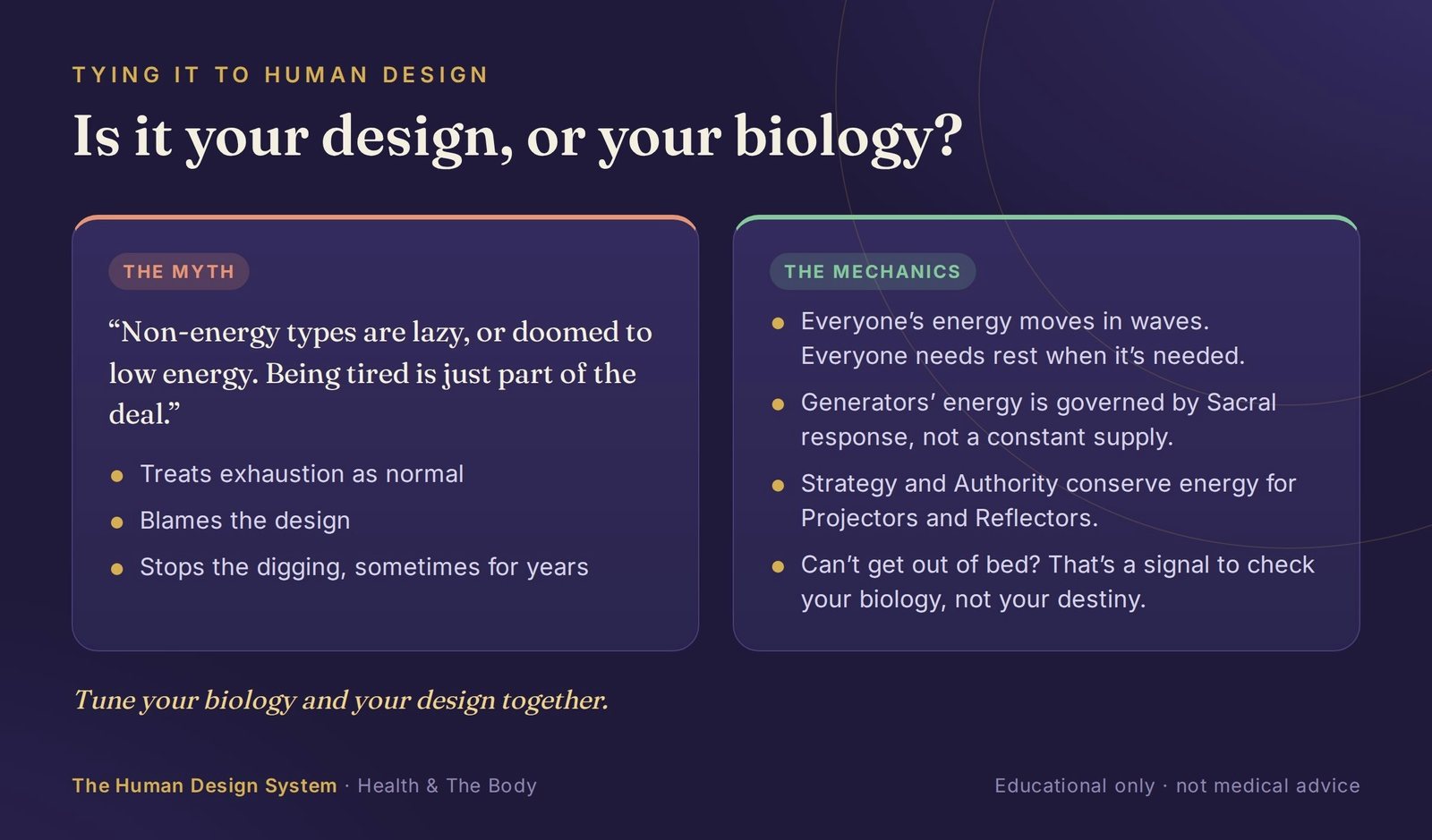
So many people think “non-energy Aura Type” means we’re lazy or doomed to low energy. WRONG! It’s about riding those ebbs and flows per our Strategy and Authority. EVERYONE needs rest when it’s needed. But genes like slow COMT or MTHFR can amplify fatigue, making it seem “normal” and IT IS SO NOT.
And it is not normal to not be able to get out of bed in the morning! Thinking that is a trap; exhaustion or fatigue may be more of the 4 body’s weakness, but it isn’t destiny; it’s a signal to tune your biology and design together. For Projectors, waiting for the right invites and using one’s Authority conserves energy, while addressing gene tweaks prevents burnout.
For years, I battled deep fatigue and mood dips, chalking it up to being a Projector, the “non-energy” type, right? Ra Uru Hu, Human Design’s founder, called us that, and I thought being tired more often than not was just part of the deal (some people said it was because of the Right Variable).
BIG MISTAKE!
For over a decade, it kept me from digging deeper into my challenging health issues, just accepting it as it was. I was a Kona Ironman Triathlete World Championship Finisher at 19 (the 5 body has Stamina). No way was that deep fatigue normal!
Turns out, my heterozygous COMT and MTHFR variants were slowing my detox and stress handling, stacking the deck against my energy and health. Once I connected the dots through testing and tweaks like methylfolate, regular detox and removing the stress of unhealthy lifestyle demands, things began to SHIFT. No more accepting wipeouts as “normal.” That’s why I’m fired up to share this: so you don’t waste time blaming your design when gene mutations might be the culprit. Knowledge like this freed me.
Are you ready to join me? Let’s use it to lift each other up, spread the word and help us all to live vibrantly.
What’s your take? Comment if you got tested too!
Join me to prepare for the 2027 SHIFT: let’s optimize our genes by design.
Work Through This With Us: Aligned Health Labs
This is the work we do together in Aligned Health Labs, our 12-week Human Design health experiment: how you’re designed to eat, where your body thrives, how you take in the world, and what moves you, tested on your own body one Lab at a time, with live clinics along the way.
- Pay in full: $797 founding cohort price. Reserve your place →
- 3-payment plan, by request: 3 × $333 monthly. Join with 3 payments →
The payment plan carries a small finance fee, since it costs us more on the platform and we hold your spot before we’re fully paid. To make up for that, you receive a $200 credit toward any class or course on our website once your payments are complete.
Be Authentic,
LaVeena B. Archers, PhD ICONIC Human Design Education
This content is for educational and informational purposes only. It is not intended to diagnose, treat, cure, or prevent any disease and should not be considered medical advice. Always consult your licensed healthcare provider before making any changes to your treatment or wellness plan.
From my courses
 Black Friday through November 30 Health & Wellness Sampler Ten health courses, one module each, read through your own design. $397 through November 30, then $597$597 See the course
 Black Friday through November 30 Fundamentals Sampler Three full classes on your Authority, your Type and your SubType. Yours to keep. $197 through November 30, then $297$297 See the course
 Black Friday through November 30 Analyst Training Sampler Sit in on a full class from every level of Professional Analyst Training. $297 through November 30, then $497$497 See the course
 Black Friday through November 30 Human Design Cosmology Sampler Hear all seven volumes of Ra Uru Hu’s cosmology and find the one that pulls at you. $297 through November 30, then $497$497 See the course
 Black Friday through November 30 Best Rest by Design A whole course on sleeping by your design, built around your own chart. $297 through November 30, then $497$497 See the course
 Self-paced course Relationship Mastery How you love, connect and get along, by design. $697 See the course
 Self-paced course The Four Variable Transformations Determination, Environment, Perspective and Motivation, as four guided experiments. $850 See the course
 Where to begin Living Your Design Awakening The first class in the Human Design education, with the community around it. $350 See the course
 Foundations Human Design Cartography The second level of Human Design education, and the way into all advanced study. $850 See the course
 Professional training Human Design Analyst Training Level 1 (PTL1), Full Year A year on the 64 gates, the 384 lines and the art of a full chart reading. $3,450 See the course
See this in your own chart
Generate your free bodygraph and start your own experiment.
Get My Free HD Chart