
Human Design Deconditioning: The 7-Year Experiment
What deconditioning means in Human Design, how Strategy and Authority guide the experiment, and how to approach the seven-year teaching without a deadline.

Deconditioning in Human Design is the ongoing experiment of living with your Strategy and Authority while recognizing the conditioned patterns you have taken to be yourself. It concerns how you engage with life and what you observe in that process. Your natal chart remains tied to your birth details.
In my teaching, I return to a distinction that can be easy to miss: conditioning is also learning. The people you meet, their differences, and the experiences you share can be nourishing. The question is how you relate to those influences and whether the pressure to become something else is directing your choices.
Human Design describes a seven-year deconditioning cycle. That gives the experiment a long horizon. It does not give every reader the same sequence of experiences or a date by which life must look a certain way.
Keep your free Human Design chart beside you as you read. If the vocabulary is new, begin with What Is Human Design?. If you need help finding the centers and results on the diagram, use How to Read Your Human Design Chart.
What you’re deconditioning from
Human Design uses conditioning to describe influences encountered through other people and the changing planetary field. In my introductory teaching, I use the chart’s definition and openness to help people distinguish consistency from areas where their experience varies.
An undefined center is not a missing part you need to acquire. You can experience its themes, learn about them, and become familiar with their variety. The teaching asks you to notice when the mind turns an inconsistent experience into a demand: I must keep this feeling, prove this quality, or become this other person.
In my teaching on the conditioned mind, I discuss recognizable patterns such as:
- The undefined Root feeling in a hurry to get free of pressure.
- The undefined Heart trying to prove its worth.
- The undefined Solar Plexus avoiding confrontation and truth.
- The undefined Sacral not recognizing when enough is enough.
These are themes to explore through your own chart. A theme is not a diagnosis of every reason you hurry, work hard, avoid an argument, or feel tired. Knowing a center’s description is a starting point for observation, rather than proof that you have identified the cause of a particular experience.
There is also a useful distinction between undefined and completely open. An undefined center can contain activated gates. A completely open center has no gate activations. In my own teaching, I describe the difference through my completely open Ajna and the experience of not knowing what to think. Keep those terms distinct when reading your diagram.
The not-self is the system’s language for conditioned patterns running the show. Learning that vocabulary can help you notice a pattern. It need not become another accusation against yourself every time you recognize one.
Conditioning is not an enemy
I teach openness as a place of learning and potential wisdom. Deconditioning does not require removing everyone whose chart differs from yours or trying to stop all outside influence.
The distinction is between learning from an experience and insisting that the experience must become your permanent identity. You can appreciate another person’s qualities without needing their design to become yours.
Transits provide another way to study that distinction. A temporary activation may complete a channel alongside your natal gates. Human Design reads this as conditioning; it does not replace your natal Type or Authority. The companion article Can Your Human Design Chart Change? separates changing influences, corrected birth data, and the experience of living with the same chart.
The experiment
The practical entry is your Type, Strategy, and Authority. In my introductions, I invite people to try the teaching and observe rather than accept it because someone sounds certain.
Strategy concerns how your Type engages with life. Authority describes the decision process read from your chart. They work together. Knowing a Type label is not the same as understanding your Authority.
For Generators and Manifesting Generators, the Strategy is wait to respond. Projectors wait for recognition and invitation in the areas where that Strategy applies. Manifestors inform before acting. Reflectors work with a full lunar cycle. Each starting point needs to be understood in the context of the person’s chart, rather than copied from someone else’s experience.
Authority also matters within a Type. An emotional Generator and a sacral Generator share a Strategy, with different Authority processes. The Authority guide explains those distinctions so that “follow your body” does not become a vague instruction to obey any strong sensation.
In my teaching on accelerating deconditioning, I emphasize applying Strategy and Authority in daily life and letting go of trying to control the results. More knowledge can help you understand the experiment, but collecting explanations is different from living with what you have learned.
Give the mind a useful role
The passenger language in my teaching describes consciousness observing the life being lived. The mind can learn, reflect, describe, and share perspective. You do not need to stop thinking to begin.
The practical question is whether a compelling explanation or a familiar “should” is taking over the process you are learning to recognize. In my teaching on the shoulds, I discuss the pressure to force, push, or become what the outside world expects. Recognizing that pressure can create a different relationship to it.
An observation might be as simple as noticing, “I felt hurried, and I assumed the urgency meant I had to commit.” That is information you can bring back to your study of Strategy and Authority. It does not require an immediate verdict about whether you are succeeding at deconditioning.
Why seven years
I teach the seven-year cycle as part of Human Design’s framework for a sustained experiment. In professional-training discussions, I also explain why lived experience matters alongside learning the material. Being able to repeat the terminology is different from having worked with it in your own life.
Seven years refers to the cycle taught in Human Design. Treat it as a framework for sustained practice, rather than a measured biological deadline or a guarantee of a particular outcome. It does not prescribe months of excitement, years of disruption, or a final phase that must arrive on schedule.
In my deconditioning-commitment teaching, I describe a movement toward greater relaxation and less struggle to force life in another direction. In student conversations, I also take pressure off the demand for immediate transformation and remind people that each person’s process takes time.
Those teachings belong together. You may notice something early and understand other patterns much later. An unsettled period does not establish that you are at a particular stage. A settled period does not establish that every conditioned pattern is gone.
Use the long horizon to allow time for experience. Avoid turning it into a countdown, a competition with other students, or a reason to postpone paying attention to your life until an anniversary arrives.
Can you accelerate it?
In the teaching where I address this question, I begin with applying Strategy and Authority and releasing attachment to the results. I describe deeper study for people who already have a foundation and are actively experimenting.
That offers a useful order: learn your starting point, live with it, ask questions, and approach further study through your own process. Advanced vocabulary is not evidence that the experiment is moving faster.
You can explore Variable and deeper education when they become relevant. They do not replace the foundation. If the birth time is estimated, be clear about that before treating finer chart details as precise; the birth-time guide explains how to investigate uncertainty.
So does your fate change?
I have used the language of changing your fate in my teaching through experience, discovery, and learning. In that context, it points toward a different way of meeting life and understanding yourself. It does not promise a new natal chart or a specific job, relationship, or material result.
In my short teaching on what deconditioning is, I describe observing experience without the same identification with conditioned thoughts. The outer circumstances may still be challenging. The emphasis is on how the experience is lived and witnessed.
This is also why a different feeling does not require a new Type. Your understanding can develop while the birth calculation remains the same. The chart-origins article explains the backstory, and the calculation guide explains what the calculator actually produces.
A chart cannot tell you how far along you are in deconditioning. Reading it again may help you understand its structure, but it does not produce a score for your progress.
Living it, and guiding it
Begin with a clear foundation rather than a promise to transform everything at once:
| Starting point | A useful next step |
|---|---|
| You do not have a chart | Generate your free chart using the best birth details available. |
| The birth time is uncertain | Keep the uncertainty visible and investigate the plausible window. |
| You know your Type but not your Authority | Read both results and study the Authority process that belongs to your chart. |
| A familiar pressure keeps appearing | Note the situation and return to the relevant center teaching and your Strategy and Authority. |
| You are comparing yourself with someone else’s progress | Return to your own experience and the questions it raises. |
| You want to guide other people | Study the current training requirements and give your own experiment time alongside the education. |
A short note about a situation can help you remember what you observed: what was happening, what pressure you noticed, what you understood of your process, and what you learned afterward. This is an optional way to support observation, rather than a test you need to pass.
If you want help understanding the chart, a reading can provide a focused introduction. Living Your Design education gives you a setting for learning the foundational language and asking questions. The free chart and library give you a place to begin before choosing further support.
Guiding other people is a separate responsibility. In my training discussions, I emphasize practice, lived experience, and learning to communicate without imposing an agenda. Read the current Living Your Design Guide certification page for the professional pathway. Time in your personal experiment alone does not establish a professional qualification.
Start with your free chart, the chart-reading guide, and your Type and Authority pages. Give yourself room to learn what those words mean in experience. The long-term commitment is to the experiment and the questions it opens, rather than to proving that you have become someone else.
From my courses
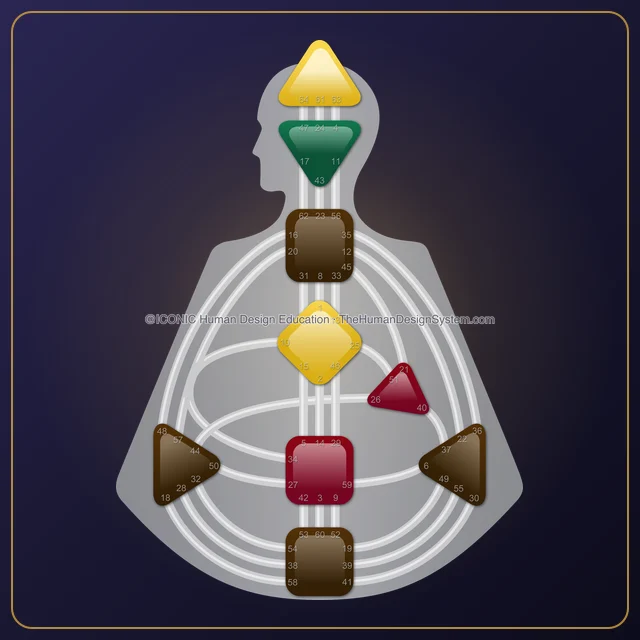 Black Friday through November 30 Fundamentals Sampler Three full classes on your Authority, your Type and your SubType. Yours to keep. $197 through November 30, then $297$297 See the course
 Black Friday through November 30 Analyst Training Sampler Sit in on a full class from every level of Professional Analyst Training. $297 through November 30, then $497$497 See the course
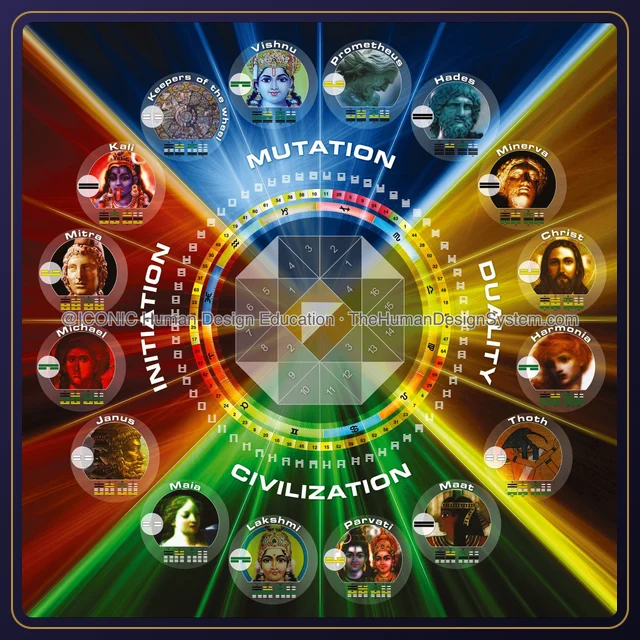 Black Friday through November 30 Human Design Cosmology Sampler Hear all seven volumes of Ra Uru Hu’s cosmology and find the one that pulls at you. $297 through November 30, then $497$497 See the course
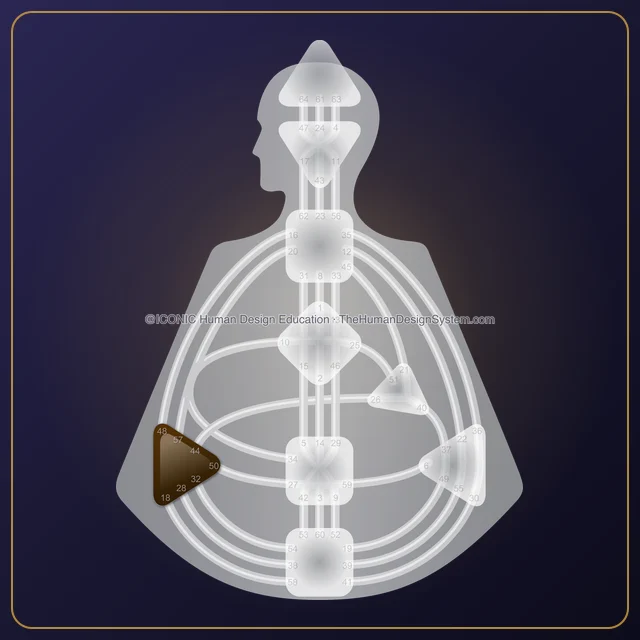 Black Friday through November 30 Health & Wellness Sampler Ten health courses, one module each, read through your own design. $397 through November 30, then $597$597 See the course
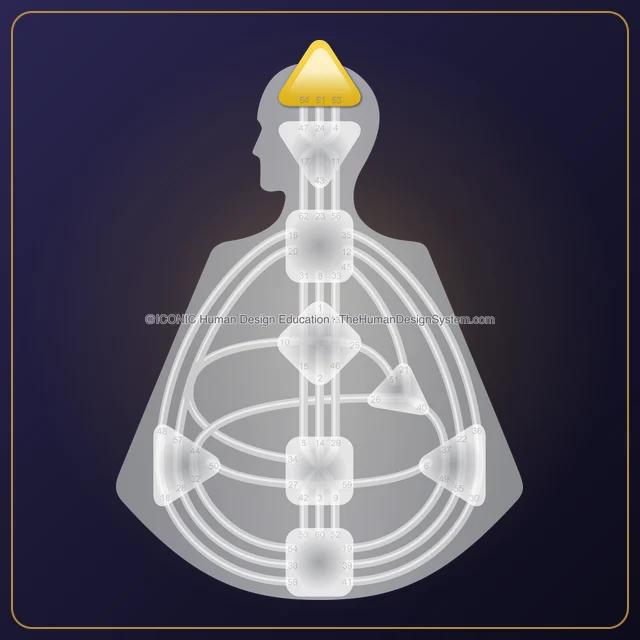 Black Friday through November 30 Best Rest by Design A whole course on sleeping by your design, built around your own chart. $297 through November 30, then $497$497 See the course
 Self-paced course Relationship Mastery How you love, connect and get along, by design. $697 See the course
 Self-paced course The Four Variable Transformations Determination, Environment, Perspective and Motivation, as four guided experiments. $850 See the course
 Where to begin Living Your Design Awakening The first class in the Human Design education, with the community around it. $350 See the course
 Foundations Human Design Cartography The second level of Human Design education, and the way into all advanced study. $850 See the course
 Professional training Human Design Analyst Training Level 1 (PTL1), Full Year A year on the 64 gates, the 384 lines and the art of a full chart reading. $3,450 See the course
See this in your own chart
Generate your free bodygraph and start your own experiment.
Get My Free HD Chart