
What the Human Design Analyst Exam Asks You to Demonstrate
The real structure behind a passing Human Design analyst reading: the five-part framework, why the exam wants your discipline before your creativity, and how to build the practice habits that make it easier.

Every semester I get students who want to prove they’ve got their own style before they’ve proven they can follow the framework. I understand the impulse. But the exam isn’t asking you to show me who you are as an analyst. It’s asking you to show me that you can organize a reading around the mechanics of the body graph, in the structure we teach, reliably enough that a client walks away with something true and usable. Your own style comes after. This is what I watch for when I’m grading, and it’s the same thing the board is watching for.
The reading has five parts, and they exist in order for a reason
The framework is introduction, definition, transition, openness, and profile. That order isn’t arbitrary. It follows the way energy moves through a body graph, from pressure to awareness to expression. If your reading can’t follow that energy from, say, the pressure centers up to the throat, something in the organization is broken, mechanically rather than just stylistically. When I close my eyes and listen to someone’s keynoting, I should be able to picture the body graph they’re describing. If I can’t, the reading isn’t doing its job yet.
Students sometimes want to skip ahead to the poetry of keynoting, the language that makes a reading feel alive. That’s fine to reach for once the bones are solid, but it never replaces the bones. I’ve seen readings pass that were simple and direct, and I’ve seen readings pass that were rich and detailed. What both had in common was that they were organized, and they never lost the thread of the actual chart in front of them.
Meet the client where they are before you say anything about their design
The exam assumes you’re reading for someone brand new to Human Design, so the introduction has to do real work: tell them what you’re going to tell them, how the session will go, what’s expected of them, and that they can interrupt with questions. Skip that orientation and you get the outcome I’ve watched happen more than once, a client who sits quietly through confusion because nobody told them they were allowed to ask, and who emails a week later to say the reading didn’t sound like them at all.
Part of that orientation is verifying the chart itself. Confirm the birth data and the chart you’re both looking at before you start. I once relied on an assistant to check this instead of confirming with the client myself, and it was wrong. We had to redo the whole reading, and of course it landed differently the second time. Don’t repeat that mistake.
The reading is for their profile and their type, not a demonstration of everything you know
A common trap is trying to prove how much you’ve learned by loading in every detail you can find. Don’t turn in a reading that reads like you already know the person, and don’t chase every gate story just because it’s interesting. The board is listening for whether you can be specific to this particular chart without overwhelming the person receiving it. That’s a real skill, and it’s different from knowing a lot.
You’re also grounding everything in type, strategy, and authority early, because that’s what orients someone toward how to decide for themselves going forward. Ra built type, strategy, and authority precisely because detailed readings on their own didn’t tell people what to do differently. Speak to how a person’s own authority works for them without ever telling them what their answer should be. That part is theirs to experiment with.
Recording, pacing, and the practical habits that protect the client
A few habits matter more than they might seem to at first. Record the session, and let the client know upfront that they can relisten rather than trying to catch everything in the moment. That alone takes pressure off people who process slowly, or who have a lot of definition sitting in the unconscious side of their chart and need time for it to land. Read your own script out loud two or three times before you submit it. You’ll hear the stumbles you can’t hear in your head, and you’ll build the kind of pacing that makes a reading easy to follow rather than exhausting.
None of this is about performing perfection. There’s no such thing as a flawless reading. The goal is demonstrating that you can competently present someone’s chart back to them in a way that’s organized, honest, and theirs to work with after you’re done.
What happens after you pass
Passing the exam is the beginning of a practice. The habits that get graded, the structure, the pacing, the discipline around checking your data, are the same habits that keep a real practice sustainable once clients are paying you. Protect your boundaries around free sessions, ask for backstory before you prepare so you’re not overexplaining to someone who’s already studied, and expect the work itself, studying a chart and building the language for it, to take real hours in the beginning. It gets faster. It doesn’t get less serious.
If you’re studying toward certification, our post on what every new analyst gets wrong first is a useful companion to this one, since it covers the mistakes that show up after the exam rather than during it. And if you want to see the framework in action on your own chart before you’re the one delivering it, you can pull it up at /free-chart.
From my courses
 Black Friday through November 30 Analyst Training Sampler Sit in on a full class from every level of Professional Analyst Training. $297 through November 30, then $497$497 See the course
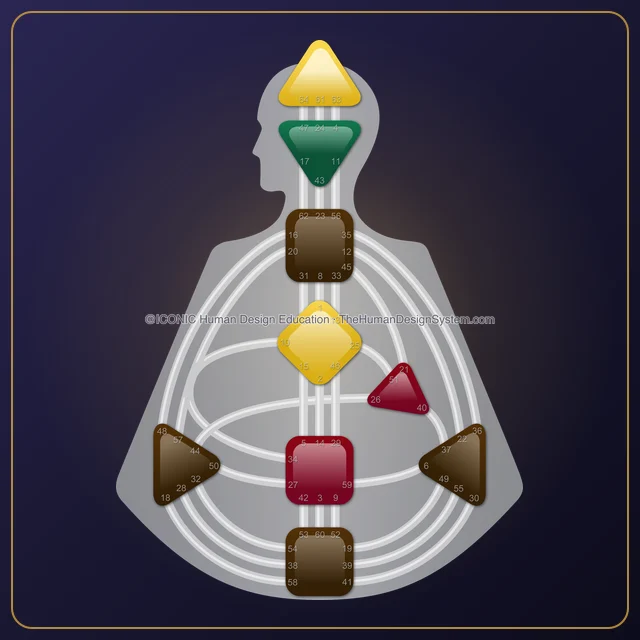 Black Friday through November 30 Fundamentals Sampler Three full classes on your Authority, your Type and your SubType. Yours to keep. $197 through November 30, then $297$297 See the course
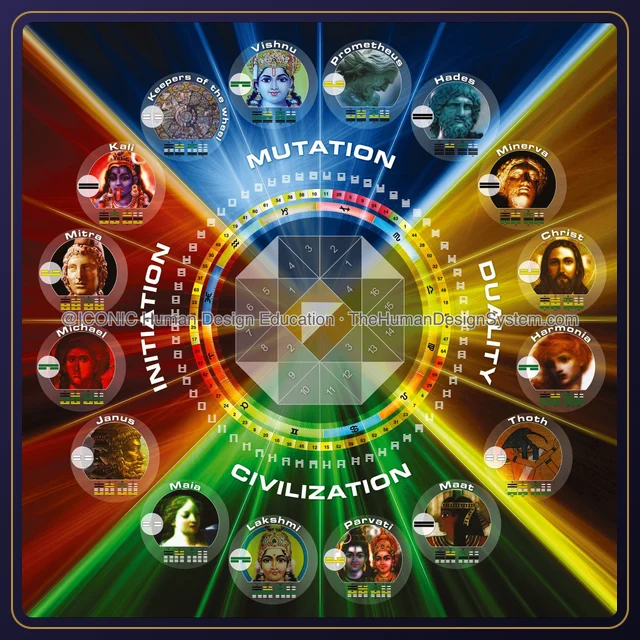 Black Friday through November 30 Human Design Cosmology Sampler Hear all seven volumes of Ra Uru Hu’s cosmology and find the one that pulls at you. $297 through November 30, then $497$497 See the course
 Black Friday through November 30 Health & Wellness Sampler Ten health courses, one module each, read through your own design. $397 through November 30, then $597$597 See the course
 Black Friday through November 30 Best Rest by Design A whole course on sleeping by your design, built around your own chart. $297 through November 30, then $497$497 See the course
 Self-paced course Relationship Mastery How you love, connect and get along, by design. $697 See the course
 Self-paced course The Four Variable Transformations Determination, Environment, Perspective and Motivation, as four guided experiments. $850 See the course
 Where to begin Living Your Design Awakening The first class in the Human Design education, with the community around it. $350 See the course
 Foundations Human Design Cartography The second level of Human Design education, and the way into all advanced study. $850 See the course
 Professional training Human Design Analyst Training Level 1 (PTL1), Full Year A year on the 64 gates, the 384 lines and the art of a full chart reading. $3,450 See the course
See this in your own chart
Generate your free bodygraph and start your own experiment.
Get My Free HD Chart