
The Analyst Study Path: How to Work Through Ra's Recordings, Level by Level
Twenty recordings of Ra Uru Hu line up with the four levels of Analyst Training. Here is what each level builds, what every recording covers, the order to hear them in, and how the Ra library credit works.

Analyst Training is taught live, with recordings, practicums and mentoring on HumanDesign.Live. Alongside it, there are 20 recordings of Ra Uru Hu that line up with the four levels, and the Analyst study path puts them in order so you can hear the mechanics in his own voice.
You can listen before class, alongside it, or after. This guide goes through the whole path: what it is and what it isn’t for, what each level of the training builds, what every one of the 20 recordings covers and why it sits where it does, how to pace your listening, and how the Ra library credit takes what you spend on these recordings off the price of the training.
What the study path is
The recordings accompany the training. They sit next to the live classes and leave them intact.
- They earn no credential. Listening to all 20 does not replace any part of Analyst Training, and no recording carries a qualification to give readings on its own.
- Completion still means four levels. You finish all four levels of the training, in whatever order suits you. From Level I you can go on to Level III and come back to Level II if you like. Level II has to be complete before Level IV, because the final exam draws on every assignment that came before it.
- They are optional. Nothing in class assumes you have bought or heard them. Every class stands on its own.
- The links are affiliate links. I earn a commission if you buy through them, at no extra cost to you. I am also Education Director of the Jovian Archive, so treat this as an interested recommendation. I don’t set Jovian’s prices, so I don’t quote them.
Why bother with them at all, then? Because Analyst Training teaches you a method, and the method came from somewhere. When you hear Ra work through the same mechanics you are practicing, in his own order and with his own emphasis, the method stops being a set of instructions and becomes something you can hear being done.
How the path is organized
Each level of Analyst Training builds one layer of a reading, and the recordings follow the same build.
| Level | What it builds | Recordings |
|---|---|---|
| I: Chart Analysis | The vocabulary every reading is built from: gates, lines, channels, keynoting | 4 |
| II: Connection and Cycle Analysis | How two designs meet, and how a life moves through its cycles | 8 |
| III: Incarnation Cross Analysis | The purpose layer: the cross, the quarters, the angles | 6 |
| IV: Preparation and the Final Exam | Reading structure, delivery, the final exam | 2 |
The order matters for a mechanical reason. A connection chart is two individual charts read together, so you need to read one chart well before you can read two. A cycle reading lays a return chart over a natal chart, so the natal chart has to come first. An Incarnation Cross reading synthesizes the whole design around the four gates of the Sun and Earth, so it rests on everything below it. The path builds a reading the same way you will deliver one: from the ground up.
Level IV is mostly live work, because the exam is your own reading, prepared and delivered with mentoring. Two recordings of Ra delivering chart overviews sit beside it (see Level IV below).
Level I: Chart Analysis
What the level builds. Level I runs across three semesters. The first teaches the Rave Analysis Method, the reading structure the rest of the training stands on, and works through the four Types, Definition, the Openness of the undefined centers, and the inner and outer planets. The second goes into the Memory circuit, Formats, Planetary Triads, Profile keynoting and the Magnetic Monopole. The third breaks the habit every new analyst has to unlearn, reading a chart as a list of isolated activations, and replaces it with one integrated structure: conditioning center by center, the Voices of the Throat, the Gates of Melancholy, and the six Colors as Motivation.
What the recordings add. Ra lays out the BodyGraph and the six lines, then shows you how he keynotes. This is where the system stops being abstract.
1. Intermediate 1: The BodyGraph, Centers, Channels & Gates
The map of your mechanics, and the foundation before any serious self-analysis or readings work. Jovian has gathered Ra’s lectures on the building blocks of every chart into one curated compilation of 31 lessons, about 39.5 hours, in audio, video and an ebook.
The lectures run in the order a chart is built. Centers are defined or open, and that one fact changes how a person experiences the theme a center carries. Channels are what define centers: both gates of a channel have to be activated before the channel is defined and the two centers it joins become consistent. Gates on their own are activated or not, and a hanging gate carries a pull toward whoever holds the other side of its channel. The compilation also covers ground many introductions skip, including the format energies from the Root and the mechanics of melancholy and fear.
Why it’s first. Every later layer depends on this vocabulary. A student who is vague about what makes a channel defined will stay vague in every level that follows. Keep your own chart open while you listen, and find each center, channel and gate in a design you live in every day.
2. The Decoding of the Hexagram: The Six Lines
The I’Ching hexagram is the structural backbone of the BodyGraph, and here Ra decodes its six lines. In the spring of 2008 he gave six lectures, one per line, sold as six audio lessons of about an hour each with the ebook transcript.
Each lecture follows one number down through the layers beneath it: the Line, then the Color, Tone and Base, and the different nuance each value takes on the Personality side and the Design side. The 1 looks for a solid foundation. The 2 carries a specialized talent and waits to be called out. The 3 discovers through trial and error. The 4 needs a secure environment and draws its power from its network. The 5 lives with projection and reputation. The 6 moves through a three-stage life that turns at the Kiron Return.
Why it’s here. Level I asks you to keynote lines in context, and a line keynote is only as good as your sense of what the number means everywhere it appears. Once you have heard the 3 as a theme that repeats in the 3rd Color and the 3rd Tone, a 3rd line in someone’s Sun reads differently. This is the best-value entry point on the whole path, and the material is pitched so that someone new to Color and Tone can follow it.
3. The Life Force: The Channels
Most study happens at the gate level. Channels get a name and a keynote, and students move on. In this series Ra comes back to the channel as a unit of its own, a life force with a function in the larger program. He taught it in 2008 as eleven lectures, sold as eleven audio lessons of about an hour each with the ebook transcript.
The lectures move through the BodyGraph circuit by circuit: the pressure channels from the Head to the Ajna and on to the Throat, Integration as the survival force of the individual, the identity channels between the G Center and the Throat, the Tantric and Format channels, then the collective channels of logic and abstraction, the individual mutating channels, and the tribal channels of support, closing on the Heart Center. The not-self expression of each force comes up beside it.
Why it’s here. Definition is where a synthesis starts. When you know what force each channel carries and where it sits in its circuit, the definition section of a reading can be spoken as one connected structure, and the open centers can be read against it. If you met this ebook during Rave Cartography, it pays back a second pass now, when the same channels have to be keynoted in one specific person.
4. Keynoting
Keynotes are word formulas: short phrases that name a genetic potential so it can be described to the person carrying it. Keynoting is the craft of choosing and linking them for one person, and it is the skill Analyst Training spends the most hours on.
This is a single audio lecture of about an hour and twenty minutes, and its subject is order. Ra takes the layers of a chart in sequence: Type and Strategy, then Definition, then Profile, then the Incarnation Cross, then the gates.
Why it’s here. The most common beginner reading is a list of parts with no spine. A systematic order is what gives a reading one. In class we build the skill in layers: the keynotes themselves until you can say them without looking, then keynote weaving (stringing a person’s defined channels into a few sentences about what they are here to do), then entering a chart through a hanging gate or the open centers. Listen to this lecture before the Super-Hero Keynoting practicum in Semester 2, and again before your RAM recap.
Level II: Connection and Cycle Analysis
What the level builds. Level II has two semesters. Chart Connection Mechanics turns a single-chart reading into a relationship reading, from the genetic imperative of mating through electromagnetics, compromise, definitions in relationship and the Voices of the Throat between two people, with a Partnership Analysis assignment in every session. Life Cycles Charting moves from one fixed chart into how a life unfolds: daily transits, the Solar Return across two full sessions, the first Saturn Return, the Uranus Opposition, the Kiron cycle, and the second Saturn Return.
What the recordings add. Two threads run through this level: what happens when designs meet, and how a life unfolds from birth through the Saturn Return to the Kiron Return. The recordings split the same way.
Connection
5. Intermediate 3: Relationships, Sex & Family
Every chart lives among other charts. This compilation follows the BodyGraph into partnership, parenting and group life: 32 lessons, about 45 hours, in audio, video and an ebook.
The heart of it is the connection chart. When one person holds one gate of a channel and the other holds the gate on the other side, the channel lights up between them, and that electromagnetic pull is often what attraction feels like. The same map shows three other patterns. Companionship is where both people have the same channel. Compromise is where one person has the whole channel and the other has only one of its gates. Dominance is where one person has a channel and the other has neither gate. From couples the compilation widens to the aura, parenting, and the Penta and the Wa, Ra’s mechanics for what happens as more people share a space.
Why it’s first in the thread. Relationships here run on electromagnetic attraction and the dynamics of defined and undefined centers, which is a different question from compatibility in the usual sense. Any relationship dynamic can work, so long as each person is living their own Strategy and Authority. Two people doing their own experiment don’t need a perfectly harmonious chart, and two people who aren’t won’t be saved by one. This is the recording for anyone tempted to turn a partner’s or child’s chart into a verdict.
6. Partnership Analysis
In June 2005 Ra taught a four-part online training for working analysts on reading two people together, and this ebook, about 135 pages, is the transcript. It is the backbone of the Connection semester, where every class pairs with a partnership analysis assignment.
Each session works through a pair of real charts in the same order: the first person’s design, then the second’s, and only then the connection chart between them. That order is the lesson. A connection reading rests on each person operating correctly as themselves, so Ra brings both people back to their own Type, Strategy and Authority before he says anything about the pair. Then come the four kinds of connection, what splits do between two people, the nodal lines, and how the centers mix when two auras meet. The later sessions turn to Type pairings and professional conduct: most connection readings are requested by one partner, and the analyst holds no fault and no blame while returning each person to their own authority.
Why it’s here. This is the source method behind every assignment in the semester. My husband and I had our own partnership analysis three years into our relationship, and I still tell students this reading serves couples who have been together a while.
7. Split Definitions and Relationships
A single audio lecture of about an hour, with the classroom presentation and an ebook. A single definition runs as one connected piece. A split carries two or more separate areas of definition with a gap between them, and in relationship that gap is where much of the attraction and much of the friction live.
The not-self ties definition to relationship, and it is how I teach splits. When a single gate would bridge the split, the not-self mind tends to turn the gap into a personal fault. When it takes a whole channel, the complaint moves to the partner. A wide split widens it again, to the world. Basic splits are the most oriented toward pairing; triple splits are built to take in information from groups. The more splits, and the wider they are, the longer a person tends to take to process information, which is useful to know before a couple argues about pace.
Why it’s here. Splits come up chart by chart in Partnership Analysis. This lecture gives you the one mechanic in depth, so you can name what a partner bridges and what the connection leaves open.
8. Aware Partnership
The last recording in the Connection thread. Where the three before it give you the mechanics and the method, this one sits on the lived side of partnership: what it means for two people to be in relationship while each is aware of their own design. Check its product page for format and length before you buy.
Why it’s last. Hear it once you can read a connection chart, so you can follow Ra’s points back to the mechanics underneath them.
Cycles
9. Life Cycles Analysis
A 150-page ebook transcript of the four-part course Ra taught online to working analysts in June 2005, on how to analyze returns against a natal chart. It is the ebook I ask every student in the Life Cycles semester to get, because everything we practice in that semester traces back to it.
The sessions each work through natal charts followed by return charts, and Ra changes the Type from day to day. The first two cover the Solar Return, using a single-definition Manifestor and then a split Generator. The last two turn to the long cycles, the Saturn Return and the Kiron Return, through triple-split Projectors and then through charts with a 6th line in the Profile, with the Uranus Opposition taken up in the question sessions and the closing guidelines.
Ra puts the difficulty in the right place. Running a cycle chart is easy; understanding the person is the hard part. Before reading any return, you need to see where this being is vulnerable to conditioning, because the not-self is what takes a cycle over. The Nodes are the working key to every cycle reading. Each cycle point is read as the middle of a window of about seven years, three and a half years before and three and a half after the exact date, and the Solar Return is read about three months before the birthday.
Why it’s first in the thread. It is the method. The three recordings after it are the life stages the method is applied to.
10. Birth to Saturn: The True Self and Diet
Ra recorded a set of short video lectures on the stages of a life: Birth to Saturn, Saturn to Kiron, and Post Kiron. This is the first, on the years from birth to the first Saturn Return around the age of thirty. Its subtitle names its two subjects: the true self, and diet, the PHS layer of the chart that bears on how a body is meant to take in nourishment.
Why it’s here. The first Saturn Return is the first major cycle in the Life Cycles semester. This recording gives you Ra’s frame for what the first thirty years are building toward, and it opens the life-stage sequence the next two recordings complete.
11. Saturn to Kiron: Planting the Cross
The middle video of the three, about 30 minutes, on the roughly twenty years between the Saturn Return around thirty and the Kiron Return around fifty. Ra’s premise is that a child raised correctly arrives at the Saturn Return ready to begin adulthood, and that the two decades after it are when the Incarnation Cross is planted: the years when a person’s purpose puts down roots long before anyone can see what it will become. Environment carries much of the weight, which ties the video to the PHS and Rave Psychology layers.
Why it’s here. It covers the span of the Uranus Opposition, the mid-life transition somewhere between 38 and 44. In a cross reading I track the Nodes by age: before the Uranus Opposition a person is living mostly through the South Node environment, and after it through the North Node. The years this video covers can feel unfinished from the inside, and hearing Ra on why helps you speak to clients in the middle of them. It also points forward to Level III.
12. The Kiron Return: The Sixth Line Being
Ra on the Kiron Return around fifty and the 6th line coming off the roof. The 6th line lives a three-part life. From birth to about thirty it lives much like a 3rd line, learning through trial and error. From about thirty to fifty it goes up on the roof, stepping back from the trial and error to observe and develop its objectivity. Around the Kiron Return it comes off the roof and re-engages with life, now as the Role Model, carrying both the experience of the early years and the perspective of the roof.
Why it’s here. The Kiron cycle closes the long-cycle work of Level II, and 6th line clients need you to know where they are in that arc, because it shapes what will be useful to them. The 6th line lecture in The Six Lines, back in Level I, sets this one up.
Level III: Incarnation Cross Analysis
What the level builds. Level III narrows back down to a single chart and asks it the biggest question a reading can ask: why is this person here. It opens with the Quarters and Angles, the Godheads that govern each cross, and the structure an Incarnation Cross reading follows, then works through the 64 gates’ life’s work meaning quarter by quarter. It reviews the Role Gates, goes into the Personality and Design Nodes, and is anchored in years of real student cross deliveries, so you see the difference between naming a cross and delivering one.
What the recordings add. This is the purpose layer that gives a reading its depth: the 12 Profiles, the 192 Incarnation Crosses, the quarters and the angles.
One caution runs through this whole level. An Incarnation Cross reading is never a first reading. Strategy and Authority come first, and I use about three and a half years of living the experiment as the guide. Go into cross material too early, for yourself or a client, and the mind grabs the life’s work and runs with it.
13. Intermediate 2: Profiles, Lines & Incarnation Crosses
The most popular recording on the path, and some of the richest material in the curriculum. Jovian has compiled Ra’s lectures on Profile, the lines and the Incarnation Cross into 26 lessons, about 36 hours, in audio, video and an ebook.
The line material is the foundation, and it is easy to underrate. A Profile forms when a conscious line pairs with an unconscious one, and once you can hear each line’s quality, a Profile reads as a role: the costume a person wears while living out their cross. The Incarnation Cross is drawn from the Personality and Design Sun and Earth. There are 192 crosses, each in one of three geometries: the Right Angle of personal destiny, the Juxtaposition of fixed fate, and the Left Angle of transpersonal karma. Every gate on the wheel also sits in one of four quarters, which gives a cross its register before a single keynote is read.
Why it’s first. It gives you the whole layer in one sustained body of lectures, so the connections between lines, Profiles and crosses are easier to hold. In my classes I teach students to orient by geometry and quarter first, before they open a reference to a specific gate, and this compilation trains that habit.
14. The Angles and Profiles Series
Ra’s series on the six lines, the twelve Profiles they make, and the three angles the Profiles live in. The Profile sets the angle of the cross. Seven Profiles live the Right Angle crosses: 1/3, 1/4, 2/4, 2/5, 3/5, 3/6 and 4/6. The 4/1 alone lives the Juxtaposition crosses. Four Profiles live the Left Angle crosses: 5/1, 5/2, 6/2 and 6/3.
Why it’s here. Within one angle, the cross stays the same while the costume changes. Two people carrying the same Right Angle cross with different Profiles come at one purpose from different places. This series is where you learn to hear the costume.
15. Quarters and Angles
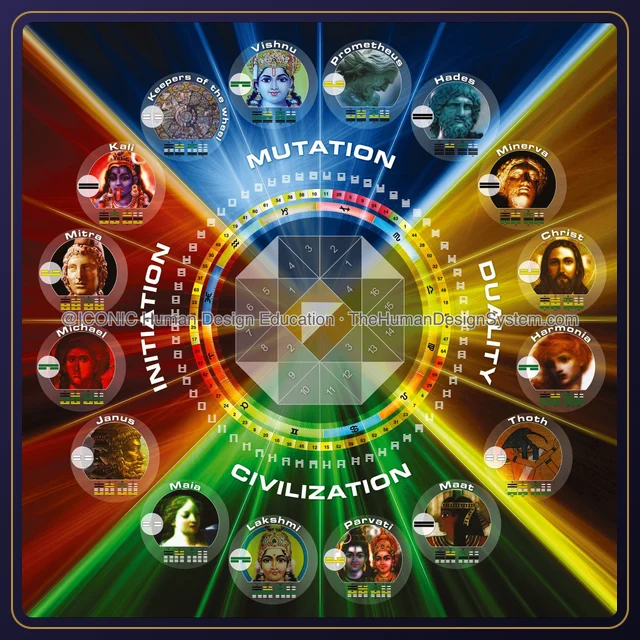
The 192 crosses are organized into a matrix: four quarters of the wheel crossed with three angles. The four quarters each carry a purpose. In the Quarter of Initiation, purpose is fulfilled through mind. In Civilization, through form. In Duality, through bonding. In Mutation, through transformation. Each quarter is presided over by four faces of the Godhead.
Why it’s here. Level III opens with exactly this material, taught before a single cross is named. I have analysts enter every Incarnation Cross through the quarter of the Personality Sun, and this recording is Ra’s own account of why that entry point works.
16. Incarnation Crosses by Profile
Ra’s reference for the life’s work: an ebook in four volumes, about 1,200 pages, one volume for each quarter. In each volume Ra goes cross by cross through the quarter and gives a description for every Profile that can carry that cross. Essential if you’re working deeply with cross readings.
Why it’s here, and how to use it. It is a reference book, and I teach it that way. At that size I use it one cross at a time. In class the books carry the material on the crosses and class time goes to practice, because reading about a cross and analyzing one are different skills. Never lift a paragraph and read it to a client. Your work is synthesis: the four gates of the cross, the Profile, the Nodes and the rest of the design woven into one picture of one person.
17. The Incarnation Cross Clinic
A live clinic where Ra reads actual charts and shows how cross themes play out in real lives. One of the most accessible ways into cross work.
Why it’s here. It does for cross readings what the Level III student deliveries do in class: it lets you hear a cross being delivered to a person, after you have studied how crosses are built. Listen to it alongside your own Incarnation Cross Analysis assignment.
18. Quarter by Quarter: The 16 Faces of the Godhead
The complete series: twenty-two lessons, about twenty-one and a half hours of audio with an ebook, with a lecture for each of the sixteen faces of the Godhead plus lessons that draw the faces and the quarters together. Every gate in a quarter shares its bottom two lines, and every gate in a face shares its bottom four, which is how sixteen groups of four fall out of the sixty-four.
Find the gate of your Personality Sun and you have found your face, along with the story your conditioned mind tends to act out when you live as the not-self. My Personality Sun is in Gate 30, which puts me under Kali. I bought the series around 2015, while I was deep in deconditioning, and a good share of it went over my head. It stayed with me anyway.
Why it’s last. It is the deepest layer of the quarter. The face narrows a quarter’s register to four gates and gives a client mythic language for a theme they may already recognize in their own life. Start with the lecture for your own face, and go further only if it is correct for you to go this deep.
Level IV: Preparation and the Final Exam
What the level builds. Level IV is a full foundation analysis, prepared and delivered in both written and verbal form, that synthesizes everything from the three levels before it into one reading a real client could receive. You work from your own chosen chart the whole semester, through Essential Reading Components, Definition, Transitions, Openness Dilemmas, Profile and Summation, with two mentoring-review cycles (one written, one audio) before your final submission.
What the recordings add. Beside the exam work, two audio courses let you hear a master deliver a reading before you deliver yours. Each is about three hours of live classroom overviews, with the Rave Chart for every one.
19. The Art of Reading Projectors
Six Projector overviews of about 30 minutes each, covering Mental, Splenic, Emotional and Self-Projected examples across single and split definitions. A Projector reading needs a different emphasis: no defined Sacral, an aura built to focus on others, and a Strategy of waiting for the invitation. A reading that gets this wrong can reinforce exactly the conditioning the client is trying to move beyond.
20. The Art of Reading Generators
Six Generator and Manifesting Generator overviews, from single to triple split definition. Generators and Manifesting Generators share the defined Sacral and the same Strategy, waiting to respond, and together they are the largest share of the people you will read for.
Why these two sit at the end. Your exam is one reading, delivered to one person. These overviews let you hear how Ra moves through a chart, what he leads with, what he leaves out, and how he brings a person back to their own Strategy and Authority. Then listen again after your first mentoring review, when you know which part of your own delivery needs the most work.
How to use the recordings
Match your listening to the level you’re in, and don’t try to buy the whole path at once.
- Before class: preview the level’s core recording (the Intermediate course listed first) so the live session lands on familiar ground.
- Alongside class: add one specialized recording at a time, the one closest to what you’re working on that week.
- After class: go back to the recordings to hear Ra keynote and read the same mechanics you practiced.
A few habits make the listening count:
- Keep a chart open. Your own first, then a practice chart from class. Find every center, channel, gate and line Ra mentions in a design in front of you.
- Listen twice. The first pass is for the shape. The second, after you have practiced the material in class, is where it starts to sound like a reading.
- Write your own keynotes. After each lecture, put what you heard into your own words for one real chart. That is the skill the training builds, and it keeps you from borrowing Ra’s sentences in a reading.
- Bring questions to class. If a recording raises something the class hasn’t covered yet, bring it to the weekly study group. That is what the live mentoring is for.
If you’re choosing just one
- The best-value entry: The Six Lines. Six hours, and it changes how you read every line in every chart.
- The most popular: Intermediate 2, for Profiles, lines and crosses in one sustained body of lectures.
- The foundation: Intermediate 1, if you are early in Level I and want the BodyGraph from the source.
- If you’re in Level II now: Partnership Analysis for the Connection semester, Life Cycles Analysis for the Cycles semester. Each is the source method behind that semester’s assignments.
Buying through my link? The Ra library credit
What you pay for recordings on this path, when you buy them through my affiliate link, comes off Analyst Training, dollar for dollar. Start from the Analyst study path page, where every recording links through to the Jovian Archive with my link attached.
| Level I | Lifeline Analyst Mentoring | |
|---|---|---|
| Price | $3,450 | $5,999 |
| Maximum credit | $500 | $900 |
- What counts: any recording on the path that you bought from the Jovian Archive through my affiliate link. If you buy with my code LAVEENA1066, what you paid after the discount is what counts. Recordings bought without my link don’t qualify, so open one of my links before you add anything to your cart.
- What doesn’t: recordings you returned or had refunded, and recordings that aren’t on this path.
- One credit per student. It doesn’t combine with the newsletter code or any other discount, so use whichever is worth more to you.
A worked example: say you bought The Six Lines, Intermediate 1 and Keynoting through my link while you were deciding whether to enroll, and your Jovian receipts add up to $380 after the LAVEENA1066 discount. If you then enroll in Level I, your private checkout link comes to $3,450 less $380. If your purchases came to $640, the credit stops at the $500 cap for Level I, and at $900 for Lifeline.
How to ask for it
- Send a message through the contact form with “Ra library credit” as the topic.
- List the recordings, your Jovian order numbers, and what you paid. The credit is only for recordings bought through my affiliate link.
- When I reply, forward the Jovian order confirmation emails.
- Once they’re checked, you get a private, one-time checkout link with the credit already taken off.
Ask before you enroll. The credit comes off the price on your private link, so it can’t be applied to a payment you’ve already made. Full details and terms are on the study path page.
Questions
Do I need the recordings to pass Analyst Training? No. Nothing in class assumes you have bought or heard them, and the exam is your own reading, prepared with mentoring.
Can I start the recordings before I enroll? Yes, and the Ra library credit is built for exactly that. Buy through my link, keep your receipts, and ask for the credit before you enroll.
I already own some of these from years ago. Do they count? Only recordings bought through my affiliate link count. Recordings you already own are still yours to study from, and they fit the path the same way.
Which level should I start with? Level I comes first. After it you can take Level III before Level II if that suits you, as long as Level II is finished before Level IV.
Where do I ask about the training itself? Through the contact form. The full program, pricing and payment plans are on the Level I page.
From my courses
 Black Friday through November 30 Analyst Training Sampler Sit in on a full class from every level of Professional Analyst Training. $297 through November 30, then $497$497 See the course
 Black Friday through November 30 Fundamentals Sampler Three full classes on your Authority, your Type and your SubType. Yours to keep. $197 through November 30, then $297$297 See the course
 Black Friday through November 30 Human Design Cosmology Sampler Hear all seven volumes of Ra Uru Hu’s cosmology and find the one that pulls at you. $297 through November 30, then $497$497 See the course
 Black Friday through November 30 Health & Wellness Sampler Ten health courses, one module each, read through your own design. $397 through November 30, then $597$597 See the course
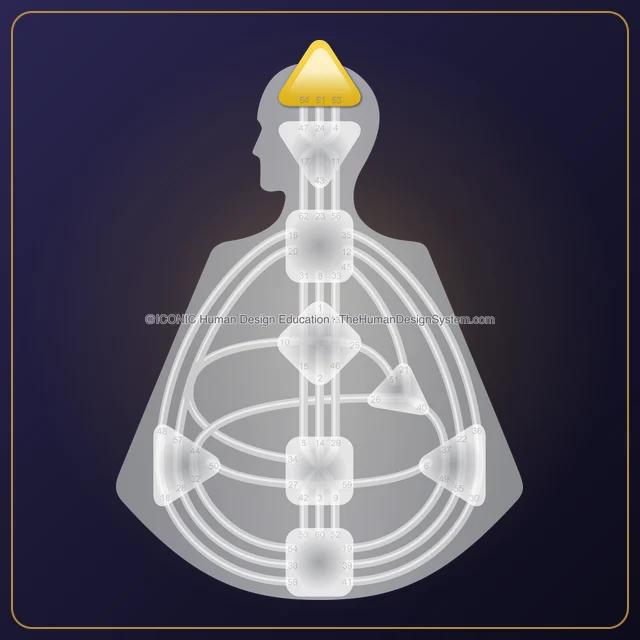 Black Friday through November 30 Best Rest by Design A whole course on sleeping by your design, built around your own chart. $297 through November 30, then $497$497 See the course
 Self-paced course Relationship Mastery How you love, connect and get along, by design. $697 See the course
 Self-paced course The Four Variable Transformations Determination, Environment, Perspective and Motivation, as four guided experiments. $850 See the course
 Where to begin Living Your Design Awakening The first class in the Human Design education, with the community around it. $350 See the course
 Foundations Human Design Cartography The second level of Human Design education, and the way into all advanced study. $850 See the course
 Professional training Human Design Analyst Training Level 1 (PTL1), Full Year A year on the 64 gates, the 384 lines and the art of a full chart reading. $3,450 See the course