
Why Human Design Analyst Training Runs on Practice Partners
A look inside the peer practice structure behind professional Human Design training: shared chart study, scaffolded practice days, and writing your own journey.

Ask most people how you get good at reading Human Design charts and they’ll describe something solitary: flashcards, a textbook, hours alone with a body graph. That picture is incomplete. Real training runs on other people. Partners, small groups, a room full of peers watching each other work, the structure exists because certain skills don’t develop any other way, no matter how many hours you put in by yourself.
Different sessions, different jobs
A well-built training schedule doesn’t treat every class the same. Some sessions exist to answer technical questions (the mechanics of a gate, a line, a circuit) using a real chart as the shared example so everyone in the room can follow the reasoning together. Other sessions have no lecture cushion at all: you and a partner or small group read for each other, out loud, and see what happens. That second kind of session is where the actual skill gets built. It’s uncomfortable on purpose. You can know every definition in the book and still freeze the first time you have to say something true about a stranger’s chart with them sitting right in front of you, and the only way through that particular wall is to hit it, repeatedly, with people who are hitting the same wall alongside you.
A chart the whole room can check
One method that shows up again and again in group training is working through the chart of someone reasonably well known, rather than always starting cold on a stranger. There’s a reason for it. When everyone in the room is looking at the same structure, you can compare what you each saw against what you assumed you already knew about that person. It’s a fast way to catch the gap between reading the mechanics and reading your own projection onto them: a gap that’s much harder to notice when you’re working alone on a chart nobody else can check your read against.
You’re allowed to just watch
Not everyone is ready to perform a reading out loud the day they walk in, and good training doesn’t treat that as a problem. Sitting in on a practice group and observing (watching how someone else structures a reading, where they hesitate, what lands) is its own legitimate form of study. This matters more for some designs than others. A Projector, for instance, tends to do real damage to their own energy by pushing to speak before anyone’s asked for their perspective. Waiting to be drawn out, rather than forcing your way into the conversation, isn’t falling behind, for that design, it’s often the correct way in. The Throat Center doesn’t reward volume; it rewards timing.
Peer feedback does something a teacher’s feedback can’t
There’s a particular value in hearing from someone who is learning at roughly your level rather than from an expert several years ahead. A peer’s confusion tells you where the material is hard, not just where you personally stumbled. Study partnerships and small standing groups exist in serious programs for exactly this reason, not as a social add-on to the curriculum, but as one of its more reliable teaching tools. Some of the most useful moments in a training program happen in those small rooms, off camera, with no instructor present at all.
Writing your own story is part of the work
Many programs ask new trainees to introduce themselves in writing early on, how they found this system, what shifted when they first understood their own chart. It looks like a simple icebreaker. It isn’t. Putting your own design into words for other people to read is the first real rehearsal of the exact skill the whole training is building toward: translating a structure into language that lands. That description of yourself is worth revisiting later, too, once you understand your own chart more deeply. You’ll find yourself wanting to rewrite it, and that rewrite is evidence the training is working. It’s the G Center doing, in slow motion and in your own words, the same work you’ll eventually do for someone else.
None of this replaces knowing the material. But knowing the material was never the hard part. If you’re curious what your own chart looks like before any of this, a free chart is the place to start, and if you’d rather have someone experienced walk you through it first, that’s what a reading is for.
From my courses
 Black Friday through November 30 Analyst Training Sampler Sit in on a full class from every level of Professional Analyst Training. $297 through November 30, then $497$497 See the course
 Black Friday through November 30 Fundamentals Sampler Three full classes on your Authority, your Type and your SubType. Yours to keep. $197 through November 30, then $297$297 See the course
 Black Friday through November 30 Human Design Cosmology Sampler Hear all seven volumes of Ra Uru Hu’s cosmology and find the one that pulls at you. $297 through November 30, then $497$497 See the course
 Black Friday through November 30 Health & Wellness Sampler Ten health courses, one module each, read through your own design. $397 through November 30, then $597$597 See the course
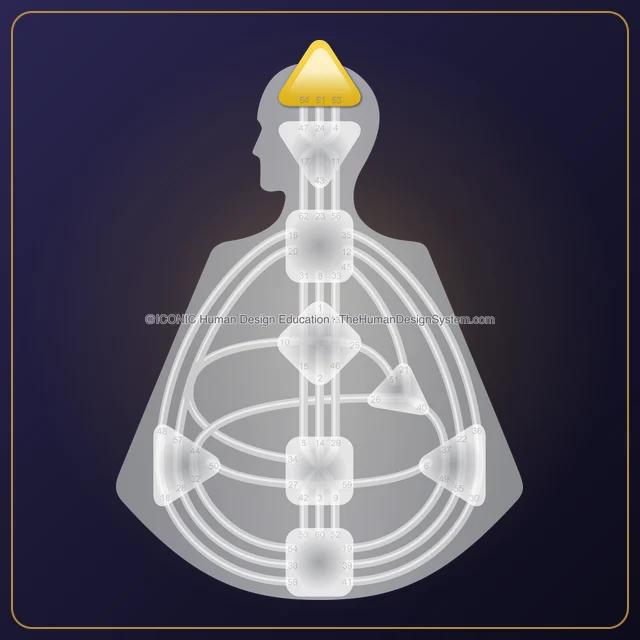 Black Friday through November 30 Best Rest by Design A whole course on sleeping by your design, built around your own chart. $297 through November 30, then $497$497 See the course
 Self-paced course Relationship Mastery How you love, connect and get along, by design. $697 See the course
 Self-paced course The Four Variable Transformations Determination, Environment, Perspective and Motivation, as four guided experiments. $850 See the course
 Where to begin Living Your Design Awakening The first class in the Human Design education, with the community around it. $350 See the course
 Foundations Human Design Cartography The second level of Human Design education, and the way into all advanced study. $850 See the course
 Professional training Human Design Analyst Training Level 1 (PTL1), Full Year A year on the 64 gates, the 384 lines and the art of a full chart reading. $3,450 See the course
See this in your own chart
Generate your free bodygraph and start your own experiment.
Get My Free HD Chart