Paramahansa Yogananda's Human Design: When the Clock Is Right and the Zone Is Wrong
His birth record carries three readings of the same figure, thirty-three minutes apart, because nobody can tell if a longitude correction was already applied. None of it touches his chart, and the reason why is the actual lesson.

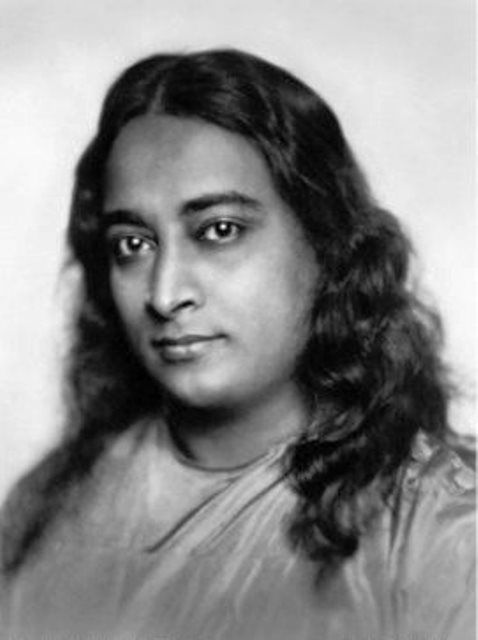
Every other chart in this series has been a question about a time: invented, disputed, self-reported, reconstructed from a family story. Paramahansa Yogananda’s is a question about the zone, a failure mode this series hasn’t covered yet, and one that does more damage to circulating charts than a wrong hour usually does.
Why the zone, not the time
Yogananda was born in Gorakhpur in 1893, when India had no single national clock. Gorakhpur ran on Madras Mean Time, an offset of +5 hours 21 minutes 10 seconds rather than the +5:30 of modern Indian Standard Time. Enter his data into software that assumes IST without checking, and the chart is off by close to nine minutes before anything else about the birth record is even in question.
He is also on-brand for a series that has run mostly through actors and politicians: a teacher of consciousness, tested the same way everyone else here is.
The record
Astro-Databank: astro.com/astro-databank/Yogananda,_Paramahansa
| Field | Value |
|---|---|
| Birthname | Mukunda Lal Ghosh |
| Date | 5 January 1893 |
| Time | 20:59 (8:59 PM) |
| Place | Gorakhpur, India, 26n45, 83e22 |
| Timezone | MMT, m80e1730 (Madras Mean Time) |
| Data source | Accuracy in question |
| Rodden rating | C |
| Collector | Rodden |
Three source notes sit behind that record, and the middle one is the reason this post exists:
Mercury Hour, 7/1976, quotes his ashram, the Self Realization Institute.
(The clipping names his organization the Self Realization Institute; its actual name is the Self-Realization Fellowship, so this looks like a transcription slip in the original 1976 article rather than a second name for it.)
(Gorakhpur is on Madras time. As it is 3 degrees 7 min east of Madras, the correction of Gorakhpur to Madras is 12 min 28 sec plus, making the time 20:50 LMT. If the LMT correction had already been made, the original Madras time would have been 20:26 LMT. We are perhaps safest in assuming that the time as given is LMT.)
23 Jan 2021: ADB uses Madras time automatically in a correct way. Adaptation of birth time no longer needed.
Read that middle note closely, because it is doing something a source note rarely does out loud: admitting it cannot tell whether the quoted figure already had a longitude correction folded into it. Depending on the answer, the same “20:59” means 20:59, or 20:50, or 20:26, three readings spread across thirty-three minutes, and Astro-Databank’s editors say outright that they are guessing which one is right. The 2021 note then says the software side has since been fixed. Both things can be true at once: the zone handling is correct now, and nobody knows which of the three the original figure was.
Confirming the offset
I ran the full twenty-four hours of 5 January 1893, Gorakhpur, at one-minute resolution in the site’s in-house engine (src/lib/hd/chart.js, src/lib/hd/timezone.js), which resolves Gorakhpur to +5:21:10, matching Astro-Databank’s MMT label to the second.
Maia Mechanics could not confirm this the direct way, because its own city database has no Gorakhpur in Uttar Pradesh, the actual birthplace. Searching “Gorakhpur” there returns a single result, a different, much smaller Gorakhpur in Haryana, several degrees of longitude to the west, and selecting it would silently compute the wrong city’s chart under the right city’s name. So I cross-checked the instant instead: London sat at UTC+0 in January 1893 with no correction of its own to apply, and entering the birth moment as a London local time and letting Maia convert it produced the identical chart, gate for gate, as the in-house engine’s own MMT calculation. The two engines agree on the underlying instant even though Maia’s city picker cannot get you to Gorakhpur by name. myBodyGraph has no record for him either, personal library or celebrity database.
All three readings agree
Running the chart at 20:59, at 20:50, and at 20:26 gives the identical result at every layer that matters for a reading:
- Type: Manifestor
- Authority: Splenic
- Definition: Single
- Profile: 1/3
- Incarnation Cross: Right Angle Cross of Penetration 4, Gate 54 (Ambition) and Gate 53 (Beginnings) conscious, Gate 57 (Intuitive Clarity) and Gate 51 (Shock) unconscious
- Channels: 16-48, The Wavelength and 26-44, Surrender
- Defined centers: Spleen, Heart, Throat
Maia Mechanics confirms all of it, including the cross’s variant number, which this site’s own cross-reference table could not be trusted for when this post was written: several of the sixteen four-variant Right Angle families were misnumbered there by one rotation. Maia’s own reading, sourced directly from the software rather than the lookup table, is Penetration 4. The table has since been corrected against Maia and now agrees.
Running the same 20:59 as if it had been entered on modern IST instead of MMT, an eight-minute-fifty-second shift, changes nothing either. Two separate, entirely reasonable grounds to distrust this chart, the thirty-three-minute LMT ambiguity and a plausible zone mix-up, and neither one moves a single line of it.
Maia Mechanics’ own Birth Time Reliability score, run against the 20:59 instant, reads High: the entered minute sits in a wide quiet stretch with nothing changing nearby. As the Hale Appleman post puts it, a High score isn’t proof the minute is correct, it only means that specific minute doesn’t happen to sit near anything that would move. Here, the two things line up: the score is High and the boundary math backs it.
Where the day turns
The reason none of it bites is distance. I found five points across the twenty-four hours where something in the chart changes; only three of them move Type, Profile, or the Incarnation Cross, which are the layers a reading leans on:
| Local time | What changes |
|---|---|
| 06:54 → 06:55 | Profile 6/2 → 6/3 |
| 09:51 → 09:52 | Type Manifestor → Projector, Profile 6/3 → 1/3, Cross → Right Angle Cross of Penetration 4 |
| 18:27 → 18:28 | Type Projector → Manifestor |
(The other two, at 04:33 and 07:08, are quieter: a redundant Throat-Spleen connection drops before dawn, and the Heart briefly disconnects from the network around 7am. Neither touches Type, Authority, Definition, Profile, or the cross, so neither one is a boundary in the sense this series tracks.)
20:59 sits two hours and thirty-one minutes past the last real boundary of the day, at 18:28. That is the actual finding here. The contrast makes the point sharper than the number alone: had Yogananda been born around ten in the morning instead, this same nine-minute zone error would have landed directly on top of the 09:52 boundary and flipped him between Manifestor and Projector. Same error, same size, opposite consequence. A zone error is only as dangerous as the boundary nearest to it, and this birthday happens to have a wide quiet stretch right where the error lands.
What moves instead: the Variable
Type, Profile, and Cross hold across the whole thirty-three-minute spread. The Variable does not, and that is the sharper answer this post can give instead of “the chart holds.”
Personality Sun’s Color, the layer behind Motivation, changes from Color 3 to Color 4 around 20:54 local time, a boundary that sits inside the LMT ambiguity itself: the 20:26 and 20:50 readings both land before it, the 20:59 reading lands about five minutes after it.
- 20:26 and 20:50 → Color 3, Desire. The 1/3 profile on Desire motivation studies and tests only what it wants, and its transference is Innocence, a detached “I’m just seeing where this goes.”
- 20:59 → Color 4, Need. The 1/3 profile on Need motivation engages only with what a situation requires, and its transference is Fear, anxious stockpiling of information.
Maia Mechanics confirms both readings directly, Color 4 Need at the 20:59-equivalent instant and Color 3 Desire at the 20:26-equivalent one. This is what the thirty-three minutes of ambiguity in the record costs him: not his type or his cross, which are safe from anywhere in that window, but which of two motivations his mind is correctly built to run on.
Testing the Manifestor reading
A Manifestor is built to initiate and inform rather than wait to be invited, and Yogananda’s public record gives a clean, checkable case to run that against: at 27, he crossed an ocean to found an organization in a country he had never visited.
He had already founded the Yogoda Satsanga Society in India in 1917. Invited in 1920 to represent India at a religious congress in Boston, he sailed that August, spoke at the congress in early October, and stayed on to lecture across the country rather than returning home when the invitation’s purpose was served. Later that year, still in Boston, he founded the Self-Realization Fellowship to carry that work forward; Los Angeles, where the organization later built its headquarters, doesn’t enter the story until 1925, five years on. He did not wait for a second invitation to stay, and he did not wait for an institution to exist before starting one.
A Manifestor’s not-self theme is anger, provoked when informing gets skipped and people feel run over by what happens next rather than told about it in advance. Nothing in the record reads that way. The pattern across his decades in America, founding schools and an order, training disciples, publishing his own account of it, is closer to a life spent informing at scale, in books and lecture halls, than one spent forcing a room. That is consistent with the reading rather than a proof of it, and it is a real test rather than a restatement of the chart’s own math, because nothing about “he moved to a new country” predicts anything about what kind of life someone builds once they arrive.
A note on tone. He remains a religious figure with living devotees and an organization that still operates. This post treats the chart as mechanics, the way this series treats every subject, with no claim about his attainment and no argument either for or against the tradition he founded.
His last Solar Return, and the day he died
Yogananda died on March 7, 1952, at the Biltmore Hotel in Los Angeles, moments after finishing a short address at a banquet honoring Binay Ranjan Sen, India’s newly arrived ambassador to the United States. The Yogoda Satsanga Society’s own account puts the moment at about 9:30 that evening and calls it his mahasamadhi, the tradition’s term for a master’s conscious departure from the body at death. The date and the place are public record. The clock time is specific and citable, and it comes from the devotional organization he founded rather than from neutral press or a medical record, so this series carries it at exactly that weight and says so. The note on tone above governs here too: the word is theirs, and this post stays with the mechanics.
His last Solar Return, the chart for his final birthday on January 5, 1952, runs into a border. He is one of three January 5 births in this series, and all three hit the same one. The convention here computes each return at the birthday’s own clock time, 8:59 PM on the same Madras Mean Time offset the rest of this post stands on. Robert Duvall and Diane Keaton share the birthday with their Suns in the sixth and final line of Gate 38, and for each of them the calendar’s leap-cycle drift ran the same-clock sky ahead, carrying the Sun out of the Fighter before their birthday clock time came around. Yogananda sits on the far side of that same border, his Sun half a line into Gate 54, and his drift runs the other way: the fifty-nine years between his birth and his last birthday cross 1900, a year the Gregorian calendar skipped as a leap year, leaving the span more than a day short of what the Sun needs. At 8:59 PM on January 5, 1952, the sky stood about a line and a half of the wheel behind where it stood over Gorakhpur in 1893, the transiting Sun still in the Fighter’s closing line with the border ahead of it. Restore 1900’s missing leap day and the convention would have held to the gate. And the thirty-three-minute ambiguity this post is built on changes nothing here: the same-clock return breaks the identical way from all three candidate readings.
A return that falls short of a border gets pinned instead to the exact minute the transiting Sun retraces the degree of the birth record, a minute that came a day and a third later, early on January 7 by Gorakhpur’s clock, and a return pinned there hands his Sun and Earth back to Gate 54 and Gate 53, Ambition and Beginnings, to the line, one final time. That much is definitional. Pinned in Maia Mechanics, the return falls before dawn on January 7, 1952, by Gorakhpur’s clock, and the field around it leaned on his oldest wiring: transiting Venus in Gate 34 reached the Gate 57 his design Sun holds, completing the 34-57 Channel of Power, the sky met his conscious Sun’s own Gate 54 from both ends of the 32-54 Channel of Transformation and held it whole around him, and 55-39 Emoting stood complete in the transits alone. What remains is the lesson this post already taught, met a second time in a different piece of bookkeeping: a same-clock convention is only as safe as the distance between the Sun and the nearest border, and his Sun lives half a line from one.
What his cycles show
Yogananda’s natal cross, the Right Angle Cross of Penetration (54/53 | 57/51), carried on a 1/3 profile, runs on repeated, hard-tested attempts to break an ancient teaching into a culture with no frame ready for it.
- Saturn Return, 1922, age 29. Under the Left Angle Cross of Limitation (32/42 | 56/60), the young Self-Realization Fellowship had just opened its first American hermitage, in Waltham, Massachusetts, two years after he sailed from India to address the religious congress in Boston.
- Uranus Opposition, 1937, age 44. Under the Left Angle Cross of Defiance (2/1 | 49/4), he was less than two years past his one return trip to India, where he had visited Mahatma Gandhi at Wardha in August 1935 and initiated him into Kriya Yoga.
- Chiron Return, 1943, age 50. Under the Left Angle Cross of Industry (29/30 | 20/34), he dedicated Self-Realization Fellowship’s third American temple, in San Diego, on September 5 of that year, calling it a Church of All Religions in the middle of a world at war.
- Second Saturn Return, 1951, age 58. The only exact pass of this cycle he lived to see fell December 2, 1951; the next would have followed on March 19, 1952, twelve days after he died. Under the Left Angle Cross of Identification (9/16 | 64/63) of that first pass, he spent his final weeks finishing God Talks with Arjuna, his commentary on the Bhagavad Gita, telling a disciple on February 25, 1952, that it was already at the printer.
In memory of an ICONIC Human Design,
LaVeena B. Archers, PhD
Chart computed against the in-house engine (src/lib/hd/chart.js, src/lib/hd/timezone.js) at one-minute resolution across all twenty-four hours of 5 January 1893, Gorakhpur, Madras Mean Time. Cross-checked against Maia Mechanics, Human Design Professional Software licensed from Jovian Archive, at the UTC instants corresponding to all three candidate readings; the two agree in full, including the Incarnation Cross variant number, the Motivation Color on both sides of the 20:54 boundary, and a High Birth Time Reliability score at 20:59. Astro-Databank record: astro.com/astro-databank/Yogananda,_Paramahansa, Rodden rating C, collector Rodden. Biographical dates cross-checked against Astro-Databank’s own events list and Wikipedia; where the two sources described the 1920 founding of the Self-Realization Fellowship differently, this post follows the more specific account.