Pope John Paul II's Human Design: The Chart That Won't Move
Ten circulating birth times spread across eleven hours, and the type, authority, definition, and incarnation cross never change once. Only the profile forks, and the strongest evidence in the file points somewhere different than the number most people repeat.

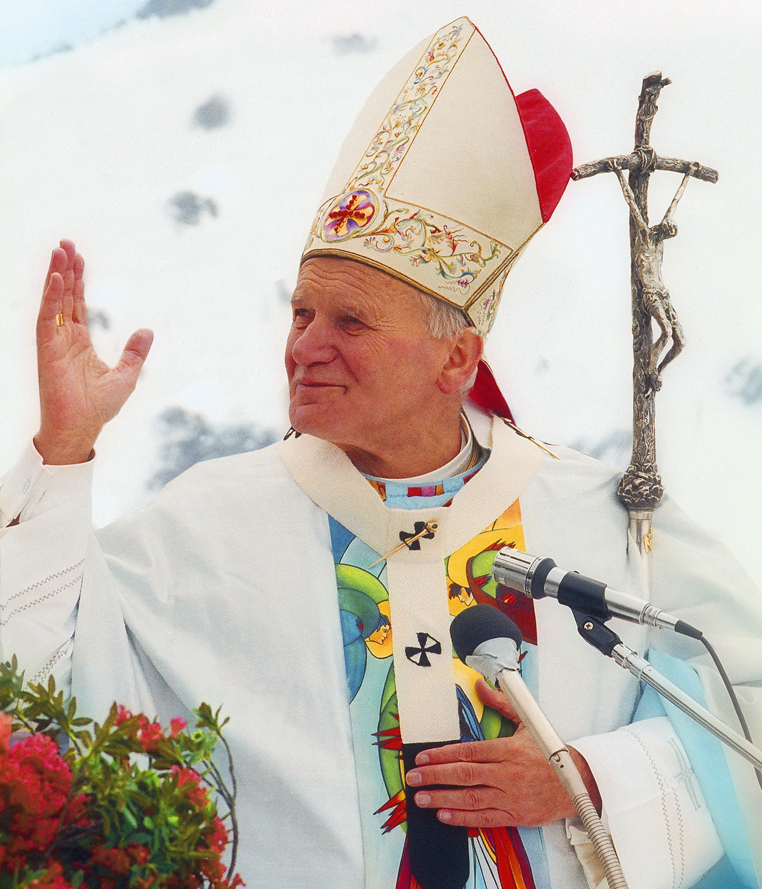
Astro-Databank rates Karol Józef Wojtyła’s birth data A, from memory, collected by Bordoni: 18 May 1920, Wadowice, Poland. What “from memory” actually contains, in this case, is ten different circulating times from ten different sources, spanning nearly eleven hours, none of them a document. That makes him a harder case than Rod Stewart, whose published time at least traced to one specific anecdote. This is what the series’ A-rated, from-memory category looks like at its worst, and its chart survives the mess almost completely intact.
The record
Astro-Databank: https://www.astro.com/astro-databank/Pope_John_Paul_II
| Field | Value |
|---|---|
| Birthname | Karol Józef Wojtyła |
| Date | 18 May 1920 |
| Published time | 17:00 (5:00 PM) |
| Place | Wadowice, Poland, 49n53, 19e30 |
| Timezone | EET h2e (standard time) |
| Data source | From memory |
| Rodden rating | A |
| Collector | Bordoni |
Source notes, verbatim. Ten separate accounts, four of them the Pope’s own words relayed by different people, the rest attributed to unnamed regional traditions with no document behind any of them:
Grazia Bordoni quotes him on Italian TV 18 May 97, speaking to a group of kids, “Today, I was born between 5:00 and 6:00 PM.”
Michael Munkasey sends clipping on an interview with him in the Seattle Times 19 May 96 that gave “Today, about 5:00 PM.”
Alois Treindl quotes the German newsgroup de.alt.astrologie for an article by “Mag. Andreas Kersting,” where he writes that he has asked the Pope in private audience about his birth time, whereupon the pope replied “at 17:00 exactly.”
Alex Vladimir Klouda writes on email, May 2000, “I have heard it from Cardinal Miroslav Vlk, who was present at the Pope’s 80’s birthday lunch, that the Pope said, ‘We are a little bit ahead with the celebration because I was born around 6 pm.’”
(Formerly, Guy de Penguern gave 12:30 PM in Mercury Hour 4/1983 “from his birth data in Poland, rectified to 12:45 PM.” Dr. Hans-Jorg has “about noon” reported by “personal witnesses.” CAO Times Vol 6/1 gives “Noon generally accepted.” Penfield quotes Judith Gee in Mercury Hour 10/1979 for 7:30 AM; in Mercury Hour 4/1982 he quotes a French horoscope magazine for 11:30 AM. Romeo Ferrao in Mercury Hour 1/1980 states, “Born at the exact hour of the eclipse, 6:25 AM GMT.” Discepolo has 1:15 PM.)
Bogdan Krusinski writes, April 2002: “Biographies give details that pinpoint, if possible at all, to ‘before noon.’ So there are at least three birth times circulating: British astrologers, 17:00; German astrologers, 13:00; and the third based on biographies, quoting memories of other persons, that give the time as before noon (Polish astrologers use between 10 and 11:00 AM).”
Krusinski’s own summary is the version that circulates now, three tidy regional camps. It buries a real asymmetry in the fuller record: the “British” 17:00 isn’t one astrologer’s convention. It’s Kersting quoting the Pope directly from a private audience, Bordoni quoting him on television, Munkasey quoting a newspaper interview, and Vlk quoting a birthday lunch, four separate witnesses, four separate occasions, converging inside a single hour. Nobody has named a comparable source for the 13:00 or the “before noon” figures. Those exist because Krusinski says astrologers in Germany and Poland use them, with no interview, clipping, or witness attached to either one.
What holds across the whole day
I ran the full twenty-four hours of 18 May 1920 in Wadowice through the in-house engine (src/lib/hd/chart.js and src/lib/hd/timezone.js), computed at one-minute resolution, then confirmed the two decisive minutes live in MaiaMechanics, the licensed Jovian Archive software. Four things never move, not once, across all 1,440 minutes:
- Type: Manifesting Generator
- Authority: Emotional, Solar Plexus
- Definition: Split
- Incarnation Cross: Right Angle Cross of Contagion, Gate 8 (Contribution) and Gate 14 (Power Skills) conscious, Gate 30 (Recognition of Feelings) and Gate 29 (Perseverance) unconscious
Six centers are defined at every minute: Sacral, Solar Plexus, Heart, G Center, Throat, and Ajna, held together by four channels that never break: 8-1, Inspiration (Throat to G Center), 2-14, The Beat (G Center to Sacral), 43-23, Structuring (Ajna to Throat), and 40-37, Community (Heart to Solar Plexus). The first three channels form one connected group, Throat through G Center through Sacral to Ajna; the fourth sits by itself, Heart to Solar Plexus, which is what makes the Definition Split rather than Single. Root, Spleen, and Head stay open all day.
Every candidate time in the source notes, from Ferrao’s 6:25 AM eclipse guess to Vlk’s remembered 6 PM, lands somewhere inside this same eleven-and-a-half-hour stretch of agreement. Type, authority, definition, and cross do not care which of the ten stories about this birth is true.
Where it breaks: two boundaries, one real fork
Only the Profile moves, and it moves twice:
| Local time | What changes |
|---|---|
| 13:14 → 13:15 | Profile 3/5 → 3/6 |
| 16:21 → 16:22 | Profile 3/6 → 4/6 |
That splits the day into three bands: 3/5, Martyr/Heretic, from midnight to 13:14; 3/6, Martyr/Role Model, for a three-hour-and-seven-minute window from 13:15 to 16:21; and 4/6, Opportunist/Role Model, from 16:22 to midnight.
Laid against the ten circulating times, the fork isn’t really three-way. It’s two real camps, with the middle band effectively empty:
- 3/5: the “before noon” Polish cluster (10-11 AM), de Penguern’s 12:30 and 12:45, “about noon,” “noon generally accepted,” Judith Gee’s 7:30 AM, the French magazine’s 11:30 AM, Ferrao’s 6:25 AM, and the German astrologers’ 13:00, all of it.
- 3/6: nobody. Discepolo’s 1:15 PM is the only circulating time inside this three-hour window at all, and it sits there by roughly forty-five minutes, with no stated reasoning in the source notes.
- 4/6: every one of the Pope’s own self-reports. Kersting’s “at 17:00 exactly,” Munkasey’s “about 5:00 PM,” Bordoni’s “between 5:00 and 6:00 PM,” Vlk’s “around 6 pm.”
I confirmed both boundary minutes live in Maia: a chart built at 13:00 returns 3/5, matching the engine, and a chart built at 17:00 returns 4/6, also matching, with Type, Authority, Definition, and Cross identical between them.
What the two profiles would actually mean
The 3/5 page describes a life where “nobody sends you the easy problems… by the time something reaches you, three careful people have already failed at it, and somehow everyone assumes you’ll figure it out.” Wojtyła worked as a stonecutter to avoid Nazi deportation, trained for the priesthood in a secret nighttime seminary, and ran a marriage and family counseling service in Communist Poland that Time magazine later called “perhaps the most successful marriage institute in Christianity,” built case by case rather than by doctrine handed down. That is a defensible 3/5 read.
The 4/6 page describes an entirely different arc: a networked, relationship-built life running through three phases, friction until about 30, a curated withdrawal from 30 to 50, and emergence as a trusted community elder after 50, whose “influence at this stage barely requires effort; you’ve simply become a reference point.” Wojtyła was named auxiliary bishop at 38, in 1958, close to that page’s own hinge age. He spent the two decades that followed inside a comparatively small, intense circle, students on mountain expeditions, a fixed group of Krakow intellectuals, the Vatican Council II delegation, before being elected the 264th Pope at 58 in 1978, at the exact edge of the page’s “emergence” phase. Both readings fit a real life. That is not a coincidence this series treats lightly; it is what happens when a subject’s biography is rich enough to accommodate more than one honest reading, which is itself a caution about reading backward from outcome to profile.
The Right Angle Cross of Contagion, and what doesn’t depend on the hour
Whichever profile is correct, the Right Angle Cross of Contagion doesn’t move, because the Sun needs roughly six days to leave a gate, far longer than any plausible spread in a birth time. Its own page describes the theme directly: “when they’re genuinely lit up about a direction, the people around them catch it… the transmission is involuntary.” A pope who once gave twenty-five speeches in a single day without repeating himself, who is credited with helping bring down the Iron Curtain less through doctrine than through the sheer visible force of his presence in Poland in 1979, and who drew literal millions to open-air Masses on every continent, is a plausible carrier of a cross whose entire mechanic is contagious conviction. The same four gates, in different arrangements, also form the Incarnation Cross behind Robert Redford’s chart and my own elsewhere in this series, a coincidence of gates rather than of biography, and one that means three very different lives are running the same four-gate structure through three different doors.
What this leaves you with
A Manifesting Generator, wired for sustained output with a direct line from the Sacral to the Throat. Emotional authority, so no decision made in the moment of feeling it was ever the one to trust, a mechanic oddly well suited to a man whose most consequential choices, the election itself included, were made by process and deliberation rather than by impulse. Split Definition, needing an outside connection to bridge his Heart-and-Solar-Plexus half to the rest of him, which the College of Cardinals, in a sense, supplied once in 1978. The Right Angle Cross of Contagion, a life built to transmit conviction rather than argue it. All of that is safe to say regardless of which of ten stories about his birth hour is true.
What isn’t safe to say is the Profile, not because the evidence is silent but because it disagrees with itself, and disagrees in a way where the better-sourced side, four independent people quoting the man’s own stated time, isn’t the side most casually-repeated summaries default to. Krusinski’s tidy “three traditions” framing flattens that asymmetry. The record underneath it doesn’t.
If you want to see how your own chart holds up against a range of possible birth times, pull your free chart and try entering your best guess an hour earlier and an hour later. If nothing moves, that layer is probably safe to trust off a soft time. If it does, you’ve found your own boundary. And if what you actually need is a Profile read against real, dated events rather than a public record spread across ten sources, a professional reading is built for that kind of case.
What his cycles show
Wojtyła’s natal cross, the Right Angle Cross of Contagion, holds under every one of the ten circulating birth times and runs on transmitting conviction by sheer contagious presence rather than argument. The Profile riding that cross is the one layer this piece never settles, forking between 3/5 and 4/6 depending on which source you trust, so this recap reads only the cycles that sit on top of the invariant cross. He lived to 84, long past every return this series tracks.
- Saturn Return, 1948, age 28. Under the Juxtaposition Cross of Self-Expression (1/2 | 4/49), he took his first pastoral assignment that July, as vicar in the rural parish of Niegowić, the posting that began his working life as a priest after his doctoral studies in Rome.
- Uranus Opposition, 1963, age 43. Under the Right Angle Cross of the Sleeping Phoenix (59/55 | 20/34), he took his seat that October among the bishops of the Second Vatican Council’s opening session, representing an archdiocese he’d been running as acting head since the previous year.
- Chiron Return, 1970, age 50. Under the Left Angle Cross of Uncertainty (8/14 | 55/59), he stood with Cardinal Stefan Wyszyński on April 28, twenty-three days before the exact date, to consecrate the Chapel of Martyrdom and Gratitude in Kalisz, marking the twenty-fifth anniversary of the liberation of the Dachau concentration camp, where nearly nine hundred Polish priests had died.
- Second Saturn Return, 1978, age 58. Under the Left Angle Cross of Migration (40/37 | 35/5), he was elected the 264th Pope on October 16, six weeks after the exact date, the conclave called after John Paul I’s sudden death that September.
In memory of an ICONIC Human Design,
LaVeena B. Archers, PhD
Chart computed through the in-house engine at one-minute resolution across all of 18 May 1920, Wadowice, Poland, with the two decisive minutes confirmed live in MaiaMechanics, the licensed Jovian Archive software. Astro-Databank: Pope John Paul II. He is not in my own Maia library, and myBodyGraph has nothing under his name either.